
Last updated September 23, 2026
Free visual inspection and a written scope of work before any mitigation begins - photos, moisture readings, and drying logs go in your claim file
The scope we write is the scope we bill. Anything new gets shown to you, in writing, before we touch it.
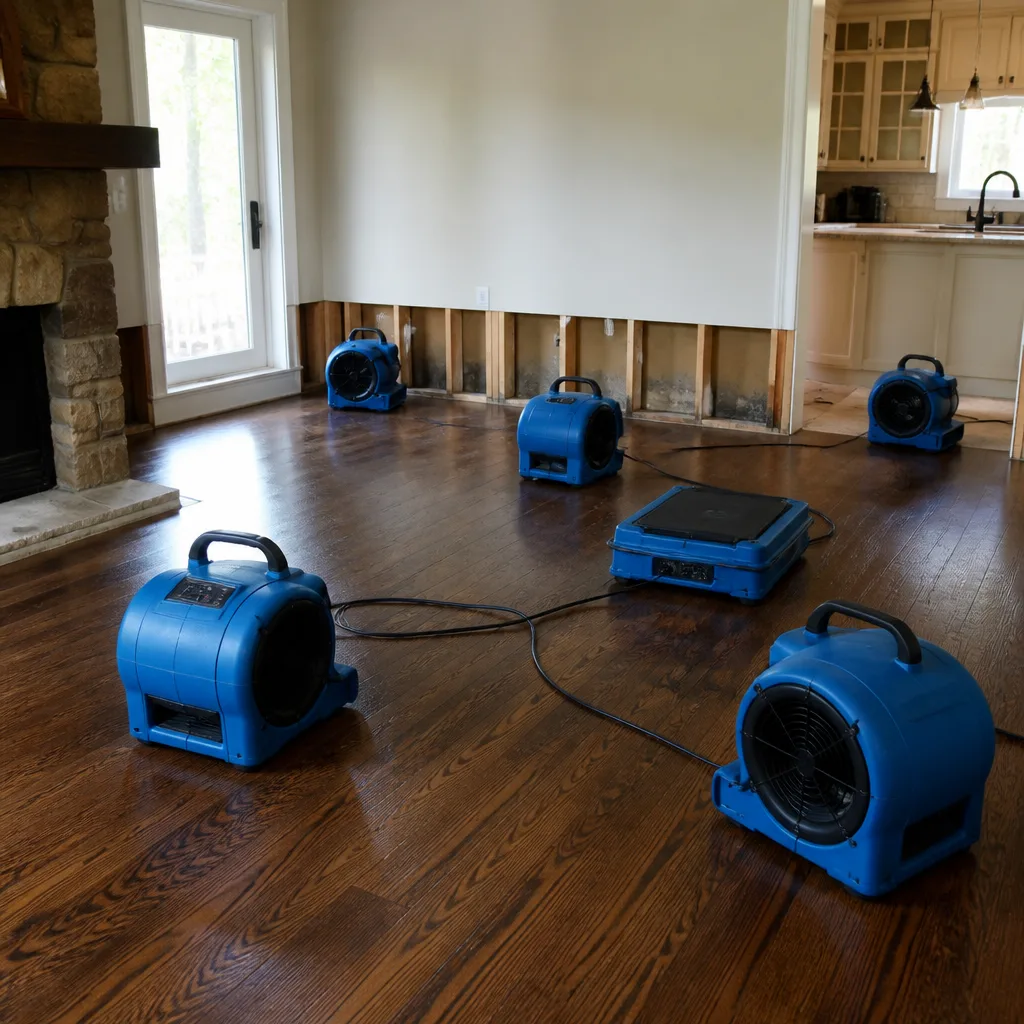

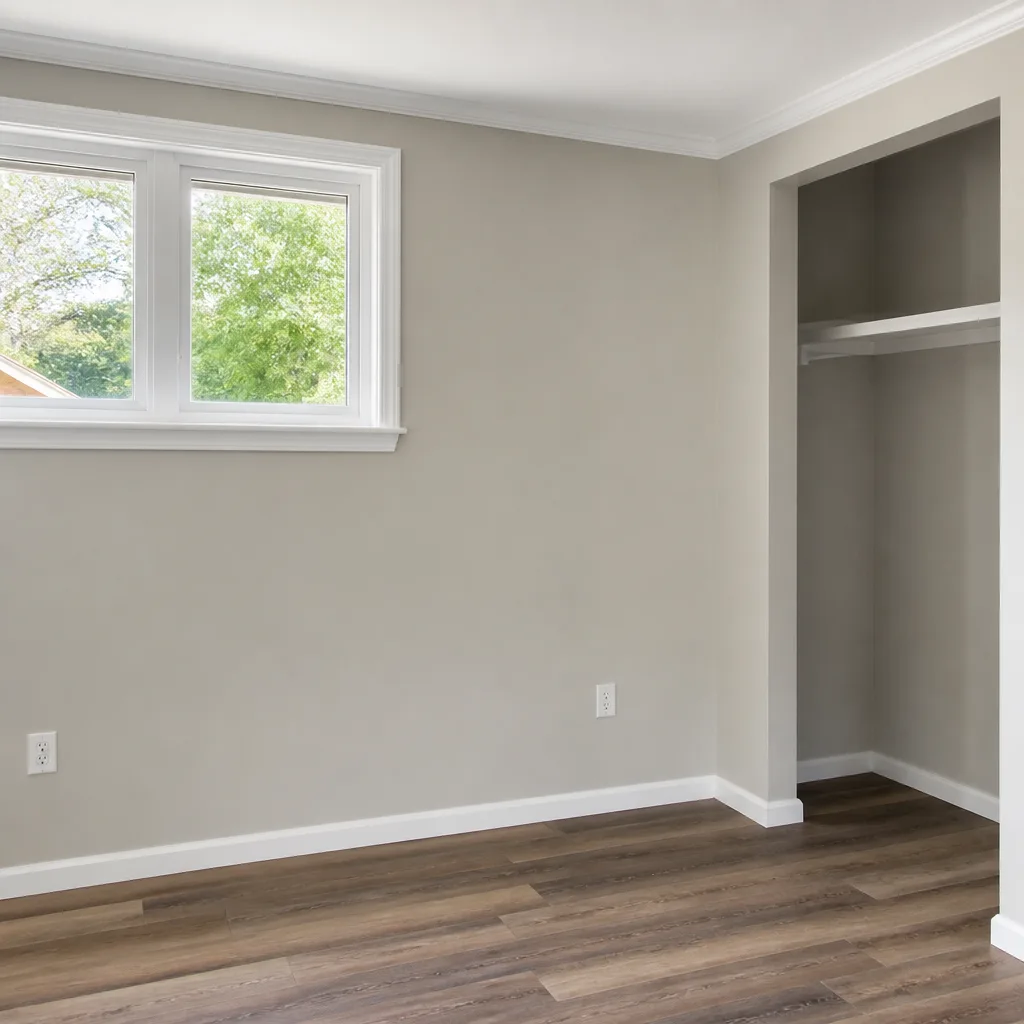

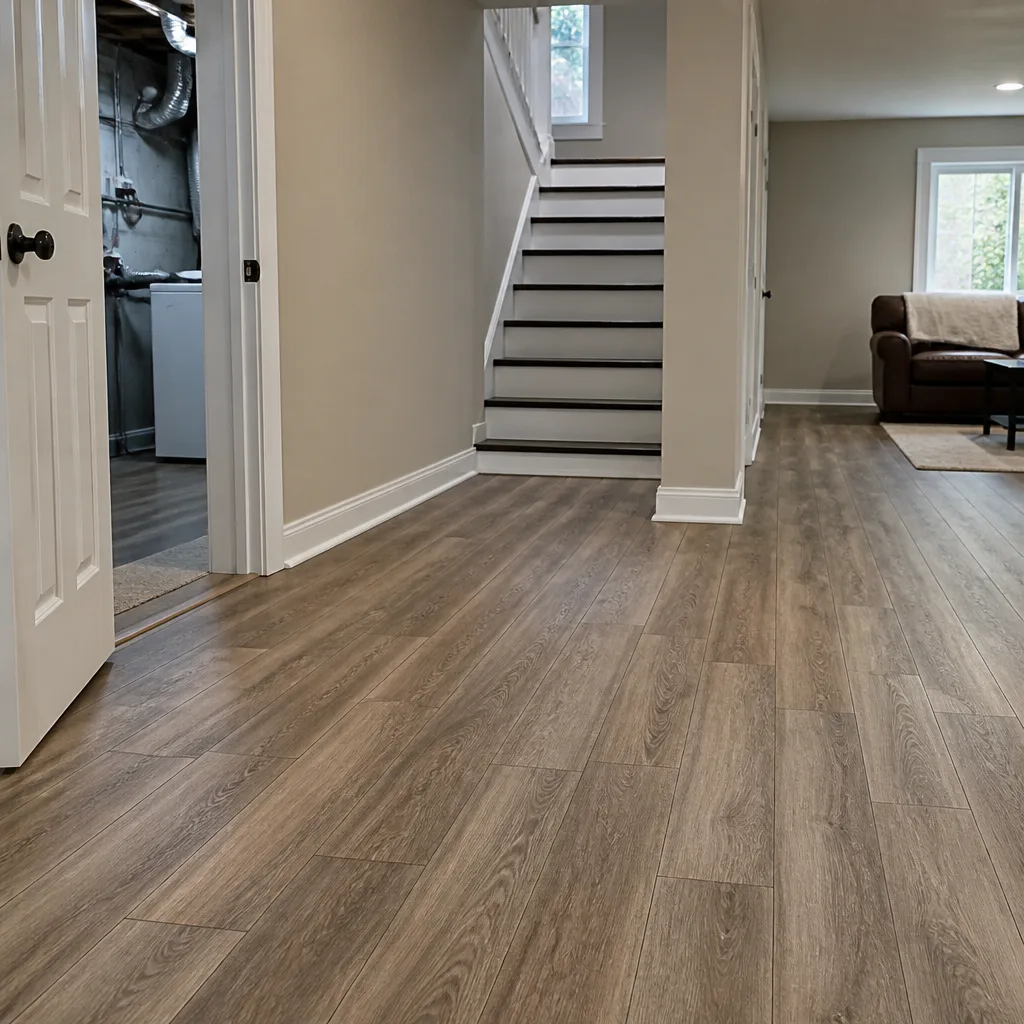
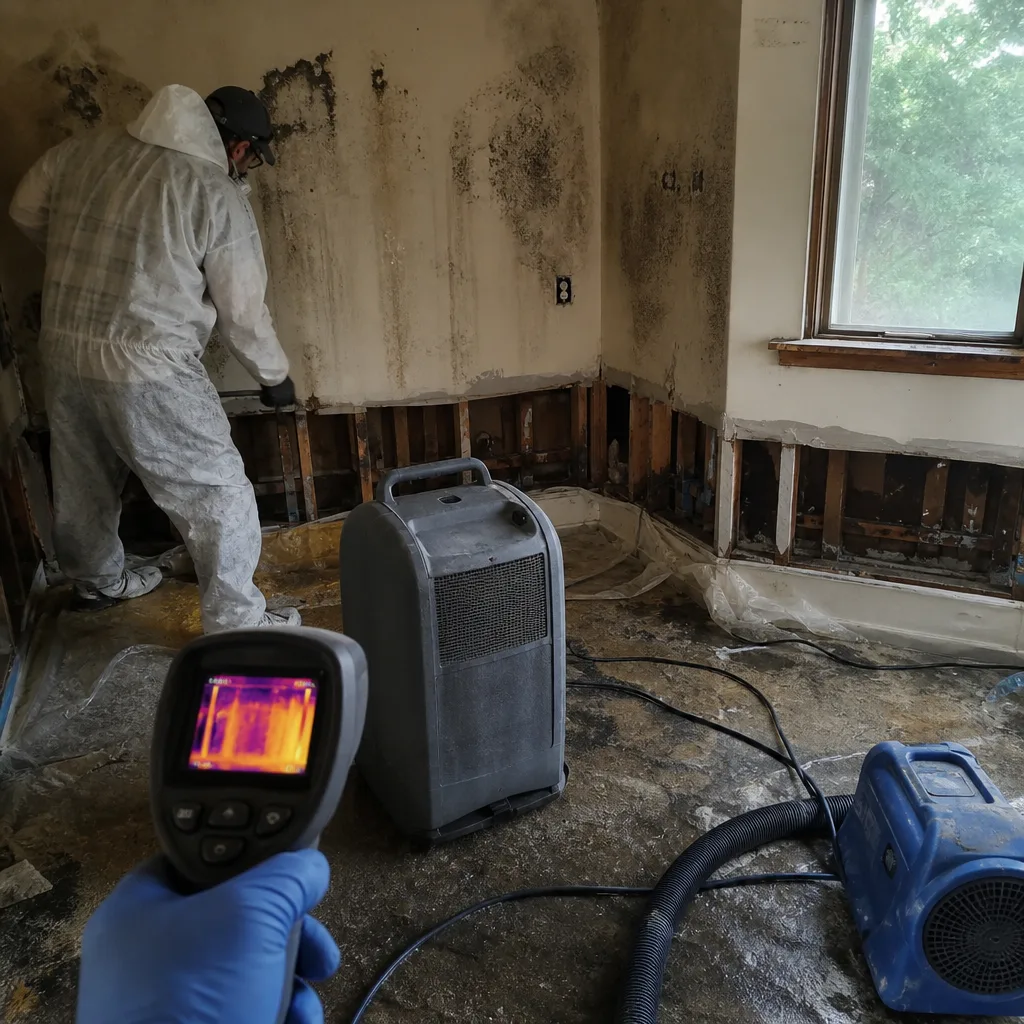 Before
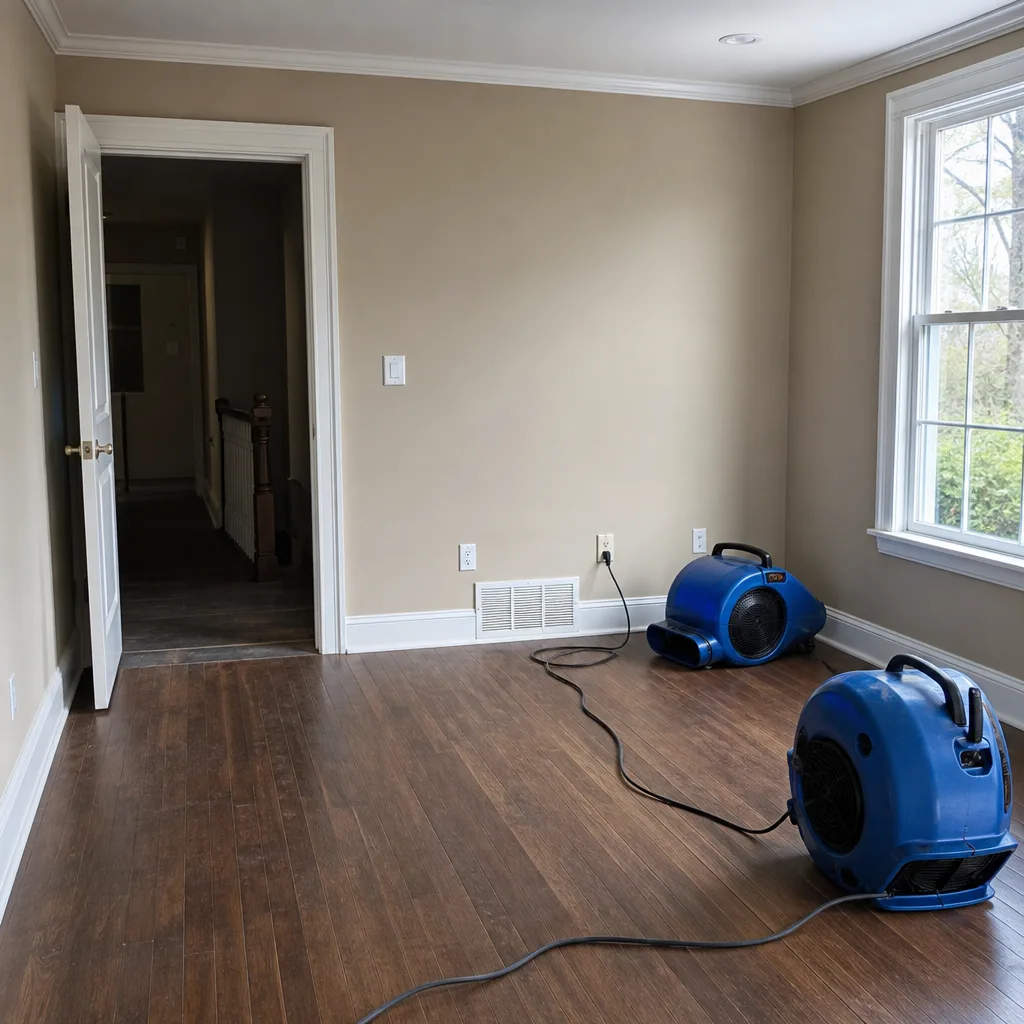 After
After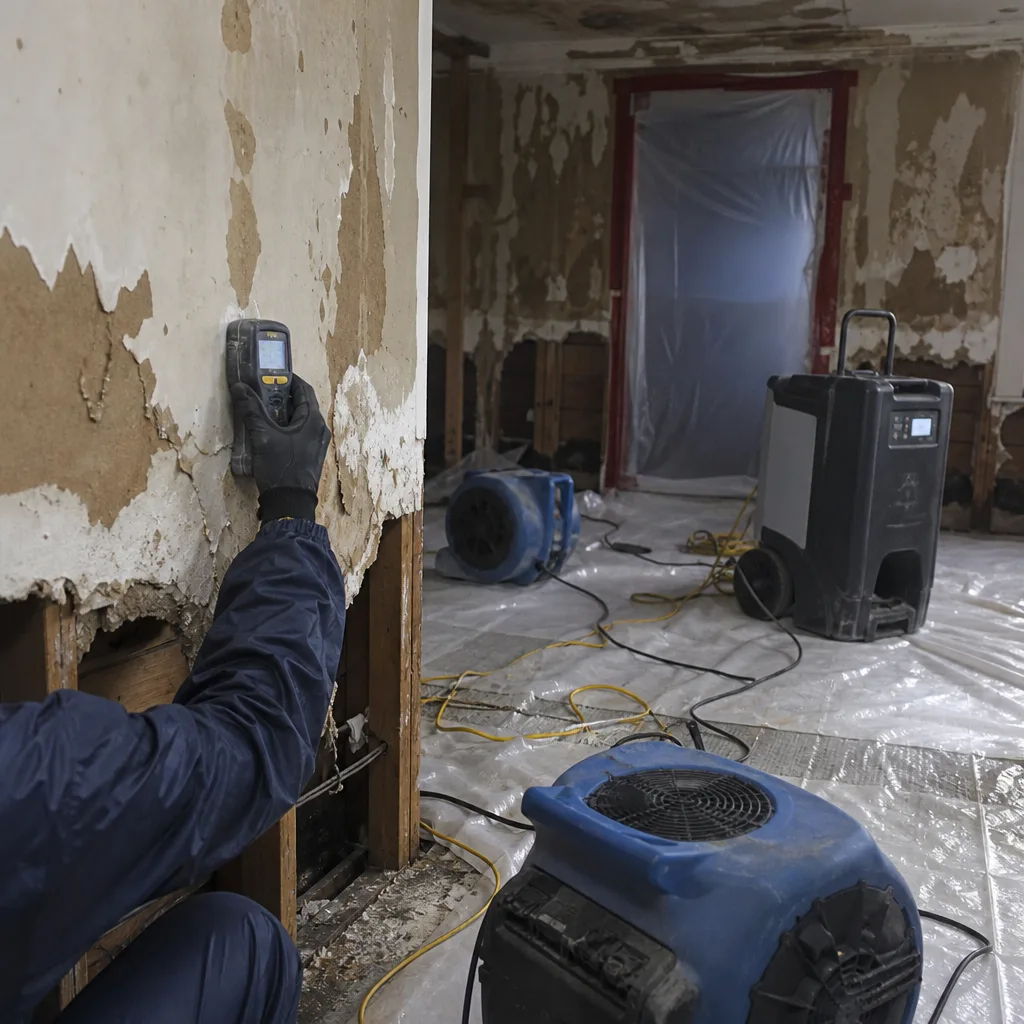 Before
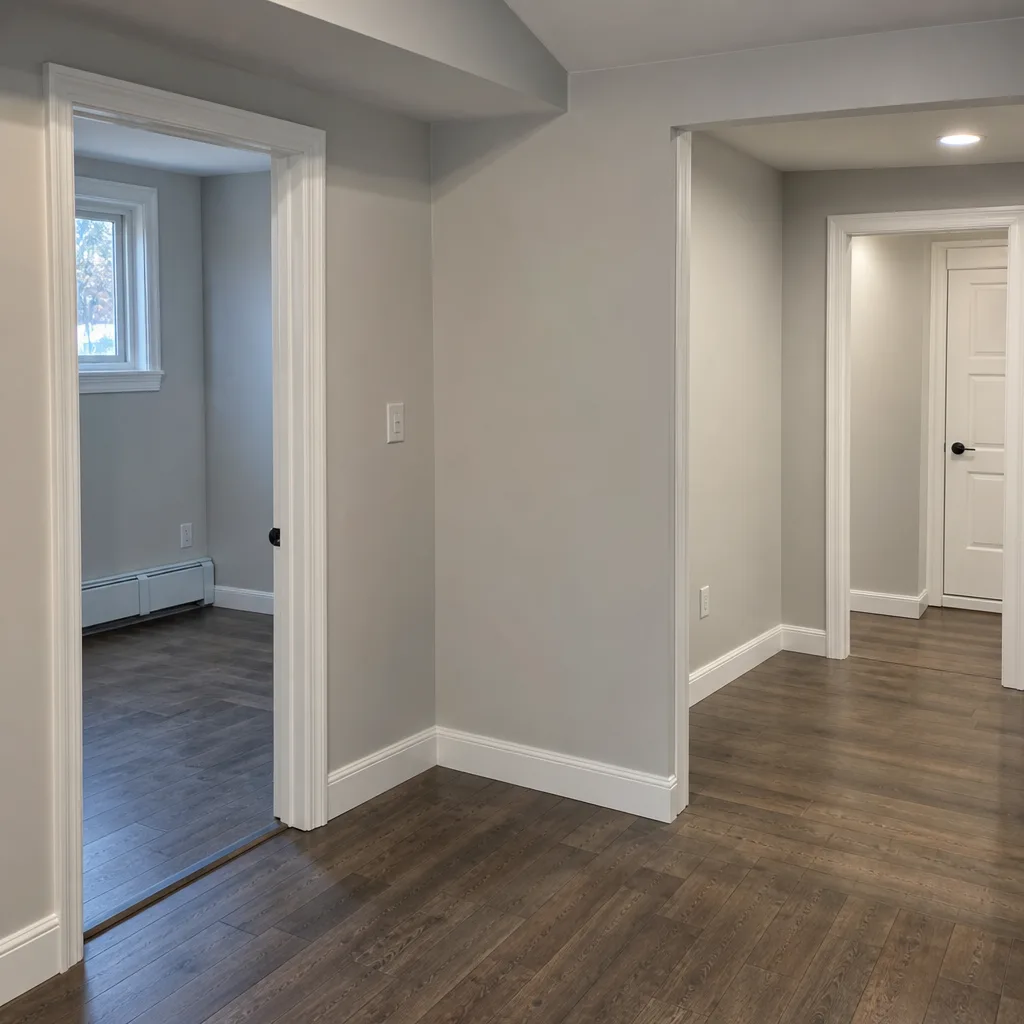 After
After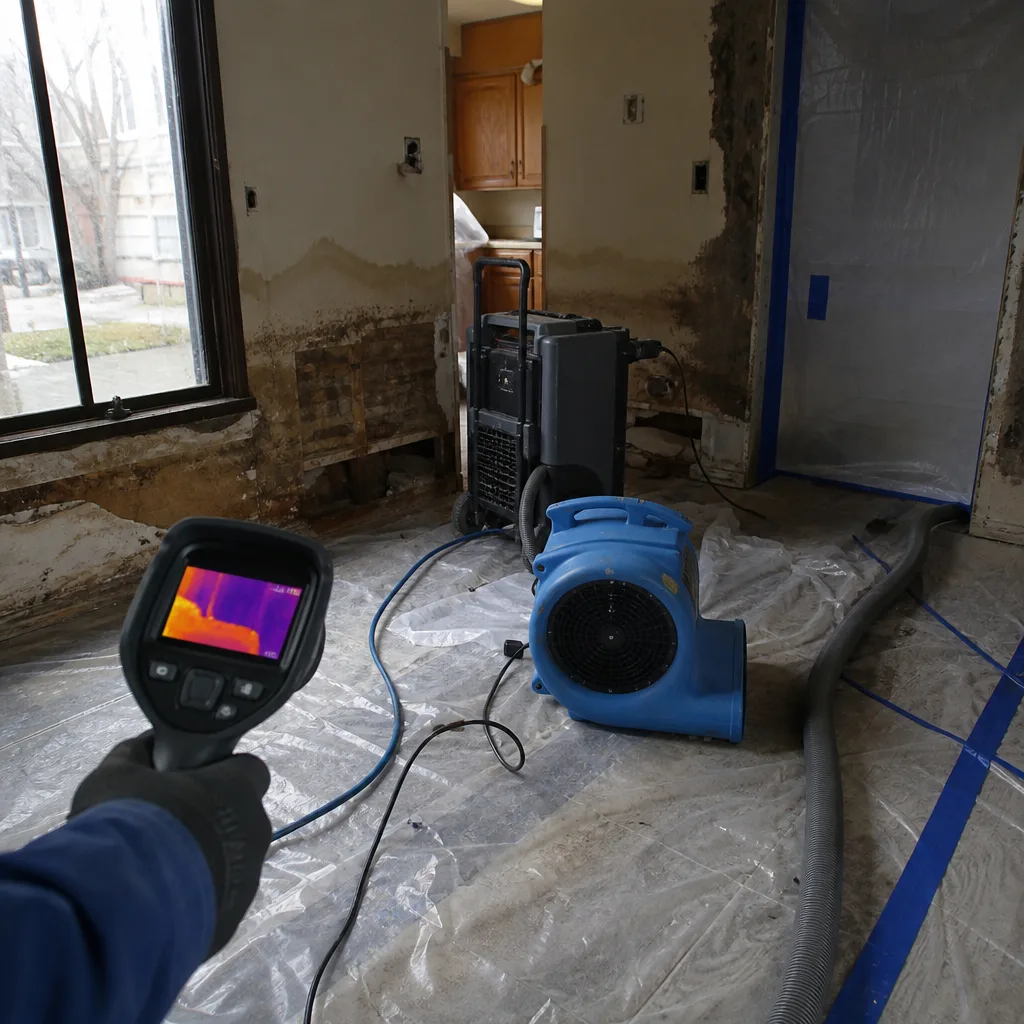 Before
 After
AfterWater Damage Restoration Maintenance Checklist for Hackensack Homeowners
New Jersey homeowners insurance policies deny roughly one in five water damage claims by invoking a single exclusion most policyholders never notice: “continuous or repeated seepage over weeks, months, or years.” In Hackensack, where freeze-thaw cycles stress plumbing from November through March and Bergen County’s combined sewer system backs up during heavy rain, that exclusion gets exercised constantly. A dated, photographed maintenance log is the difference between a covered claim and a denial letter. This checklist is built to produce that record, not just complete tasks.
Quick Answer
A water damage restoration maintenance checklist for Hackensack homeowners includes monthly visual inspections of plumbing and appliances, quarterly tests of sump pumps and backwater valves, semi-annual roof and gutter checks timed to nor’easter season, and annual moisture baseline readings recorded by room. Every task should be photographed, dated, and logged with the tool used and the person who performed the check. That log becomes admissible evidence if an insurer claims neglect.
Table of Contents
- Why Documentation Beats Denial: The NJ Insurance Landscape
- Monthly Tasks: Plumbing, Appliances, and Visible Surfaces
- Quarterly Tasks: Sump Pumps, Backwater Valves, and Seasonal Prep
- Semi-Annual Tasks: Roof, Gutters, and Exterior Drainage
- Annual Baselines: Moisture Readings and Material Inventories
- Your Maintenance Log Template
- Common Mistakes to Avoid
- When to Call a Professional
- Frequently Asked Questions
- The Bottom Line
BeforeAfterWhy Documentation Beats Denial: The NJ Insurance Landscape
The New Jersey Department of Banking and Insurance publishes consumer complaint data that tells a clear story. Water damage claim denials citing “long-term neglect” or “seepage over time” outnumber all other dispute categories combined. In 2023, the most recent year with full data, these exclusions appeared in 34% of all homeowner complaints filed against insurers writing in Bergen County. The pattern is simple: water finds a slow path, damage accumulates invisibly, and when the homeowner finally files, the adjuster photographs pre-existing staining and closes the file.
We’ve handled water damage restoration in Hackensack since 2011, and the claims that pay without argument share one trait. The homeowner produces a maintenance record with dates, photos, and readings. Not a vague memory of “checking things once in a while.” A log.
The Haven Standard, which governs every job we take, requires written documentation before work begins. Clause 1: a written price delivered before anyone starts work. That same discipline applies to prevention. A maintenance log with dated entries, photographed conditions, and recorded measurements turns a disputed claim into a documented event with a clear timeline.
Three specific maintenance failures appear repeatedly in NJ denial letters:
- Failed sump pump with no replacement record. Insurers argue the pump was known to be old or non-functional.
- Visible toilet seal leakage with no repair attempt documented. Staining around the base, if photographed by the adjuster, supports a “repeated seepage” denial.
- Clogged gutters causing ice dam intrusion. Without cleaning records, the insurer treats this as predictable, preventable damage.
Hackensack’s position in the Hackensack River watershed adds local pressure. The city’s combined sewer system, serving older neighborhoods near Main Street and Prospect Avenue, handles both stormwater and sanitary flow. During the intense rainfall events that have increased since 2015, system capacity is exceeded and backflow occurs. A functioning backwater valve, tested and logged quarterly, is specific, documentable protection against a known local risk-one reason we published The Complete Guide to Damage Restoration in Hackensack.
Monthly Tasks: Plumbing, Appliances, and Visible Surfaces
These checks take 20 minutes and require only a flashlight, your phone camera, and a moisture meter if you own one. The goal is early detection of conditions that, left unlogged, become “long-term seepage” in an insurer’s denial letter.
Under-Sink Plumbing
Check every sink cabinet in the house. Look for:
- Corrosion on supply line valves, especially the angle stops where flexible supply lines connect
- Discoloration of cabinet base or wall paneling
- Dampness on the shutoff valve handle or supply line nut
Photograph the cabinet interior with the flashlight on. Include the date card or phone timestamp in frame. If you use a pinless moisture meter, record the reading on the cabinet base. Normal dry wood reads 6-12% moisture content. Readings above 15% warrant closer inspection and a dated note.
Toilet Seals and Supply Lines
Inspect the floor around each toilet base. Rock the bowl gently. Any movement indicates a wax seal compromise. Look for:
- Staining or warping of vinyl flooring at the base perimeter
- Corrosion on the supply line flex connector
- Sweating on the tank or bowl in humid months
The flex connector is a common failure point. Braided stainless steel lines last 5-8 years in Hackensack’s water chemistry, which runs moderately hard with seasonal temperature variation. If your connectors show no installation date, photograph them and note “age unknown” in your log.
Washing Machine Hoses
Rubber washing machine hoses fail predictably after 3-5 years. Braided steel lines last longer but still require inspection. Check for:
- Bulging, fraying, or corrosion at the coupling
- Wetness behind the machine
- Crimping from machine vibration
Photograph the hose label if visible, or the overall condition if not. Record the reading from any moisture detected on the wall or floor.
Water Heater Pan and T&P Valve
Your water heater’s temperature and pressure relief valve should discharge to a visible location, not into a hidden drain. Check the pan beneath the heater for moisture. Lift the T&P valve lever briefly (water will discharge; be ready). If it does not flow, or if it continues dripping after release, the valve needs replacement. This is a safety device, not optional.
Log the tank serial number, which encodes manufacture date, and photograph the valve and pan condition.
Visible Foundation and Basement Walls
Walk the basement perimeter. Look for efflorescence (white mineral deposits), which indicates water migration through concrete. Note any new cracks, especially horizontal cracks in block walls, which indicate hydrostatic pressure. In Hackensack’s clay-heavy soils, particularly in neighborhoods near the river, seasonal water table fluctuation creates this pressure cyclically.
Photograph each wall section. If you own a moisture meter, take readings at 12-inch height intervals and record them. These become your baseline for comparison if water intrusion occurs later.
Quarterly Tasks: Sump Pump, Backwater Valve, and Seasonal Prep
Quarterly checks align with Bergen County’s flood risk calendar: March (pre-spring thaw), June (pre-hurricane season), September (peak hurricane risk), and December (pre-winter freeze). Each check should be performed, photographed, and logged within a 2-week window of these dates.
Sump Pump Function Test
- Pour 5 gallons of water into the sump pit slowly, simulating groundwater rise.
- Verify the float switch activates the pump before water reaches the pit rim.
- Confirm discharge line carries water at least 10 feet from the foundation.
- Listen for grinding, clicking, or cycling without water (indicates switch failure).
- Check the check valve on the discharge line for proper one-way flow.
- If battery backup exists, test by unplugging the primary pump and repeating the water pour.
Photograph the pump label (model and date), the water level at activation, and the discharge terminus. Record the time from pour to activation. A pump taking more than 60 seconds to activate with 5 gallons is approaching failure. In Hackensack, where spring snowmelt and summer thunderstorms both drive groundwater, pump failure during active weather is the most common cause of basement flooding we see. For current pricing context, see our Damage Restoration Cost Breakdown: The Hackensack Homeowner’s Reference for 2026.
Replacement interval: most submersible sump pumps last 7-10 years under normal use. If your pump runs frequently due to high water table, replace at 5 years and log the installation.
Backwater Valve Inspection
Hackensack’s combined sewer system creates backflow risk during intense rainfall. The backwater valve, typically installed on the main sewer line where it exits the house, prevents sewage from flowing backward into your basement. It’s a mechanical gate that requires periodic cleaning and function verification.
- Locate the access port, usually in the basement floor near the front wall.
- Open the cap (have a bucket ready; residual water and odor are normal).
- Visually inspect the gate or flap for debris, corrosion, or binding.
- Verify the gate moves freely and seats completely.
- Clean accumulated grease and debris with a long-handled brush.
- Replace the cap with fresh Teflon tape or plumber’s putty.
Photograph the valve interior and the cleaned gate. Note any corrosion or wear. If the gate does not seat fully, call a plumber and log the finding with date. A failed backwater valve during a sewer backup event is not a covered claim if the valve was known to be non-functional.
Exterior Drainage and Grading
Walk the property perimeter. Confirm soil slopes away from the foundation at minimum 6 inches of drop over 10 feet. Check that downspout extensions carry water at least 6 feet from the foundation. In Hackensack’s older neighborhoods, where lot sizes are smaller and foundations are closer to property lines, this is often compromised by neighboring grade or hardscaping.
Photograph the grade at the foundation corner, the downspout terminus, and any pooling areas. After heavy rain, note standing water duration. Water remaining more than 24 hours indicates drainage failure.
Semi-Annual Tasks: Roof, Gutters, and Exterior Drainage
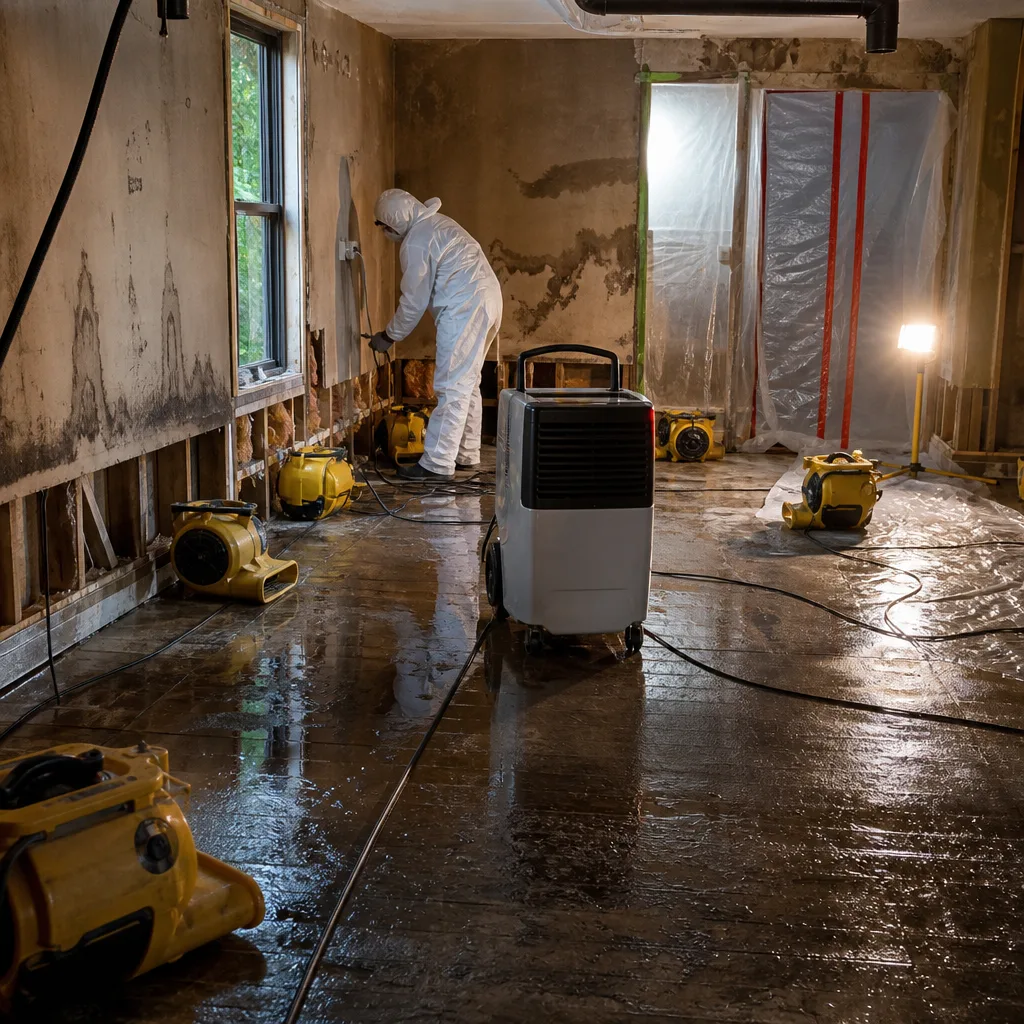
Schedule these checks for late October, after leaf drop but before first freeze, and late April, after nor’easter season but before summer humidity. Hackensack’s position in the coastal storm track means roof damage from March-April nor’easters is common; the October check catches it before winter ice dam formation.
Roof Surface and Penetrations
From the ground with binoculars, or from a ladder at the eaves if you are comfortable with heights, inspect:
- Missing, curled, or cracked shingles, especially at valleys and ridges
- Damaged or missing flashing at chimneys, vents, and skylights
- Exposed nail heads or sealant failure
- Sagging at the ridge or between trusses
- Granule accumulation in gutters, indicating shingle deterioration
Photograph each elevation of the roof. If you identify damage, photograph close-ups and record the location (e.g., “south elevation, 8 feet from west corner, chimney flashing”). This specificity matters in claims. “Roof looked fine last fall” does not.
Ice dam risk is significant in Hackensack. Poor attic insulation and ventilation warm the roof deck, melting snow that refreezes at the eaves. The April check should include attic inspection for:
- Proper soffit vent clearance (not blocked by insulation)
- Uniform insulation depth, minimum R-49 in NJ climate zone
- Signs of prior ice dam water intrusion: stained rafters, wet insulation, rusted nail heads
Gutter and Downspout Function
- Clean all gutters by hand or with a gutter scoop. Remove debris to the downspout outlet.
- Flush gutters with a hose, verifying flow to each downspout.
- Check downspouts for clogs by inserting the hose from the top; water should flow freely within seconds.
- Verify all downspouts have extensions or splash blocks carrying water away from foundation.
- Inspect gutter hangers and seams for separation or sag.
Photograph the cleaned gutter interior, the downspout flow test, and the extension terminus. Record any repairs made. A gutter that separates from the fascia and dumps water against the foundation, if unlogged, supports a “failure to maintain” denial.
Window and Door Seal Inspection
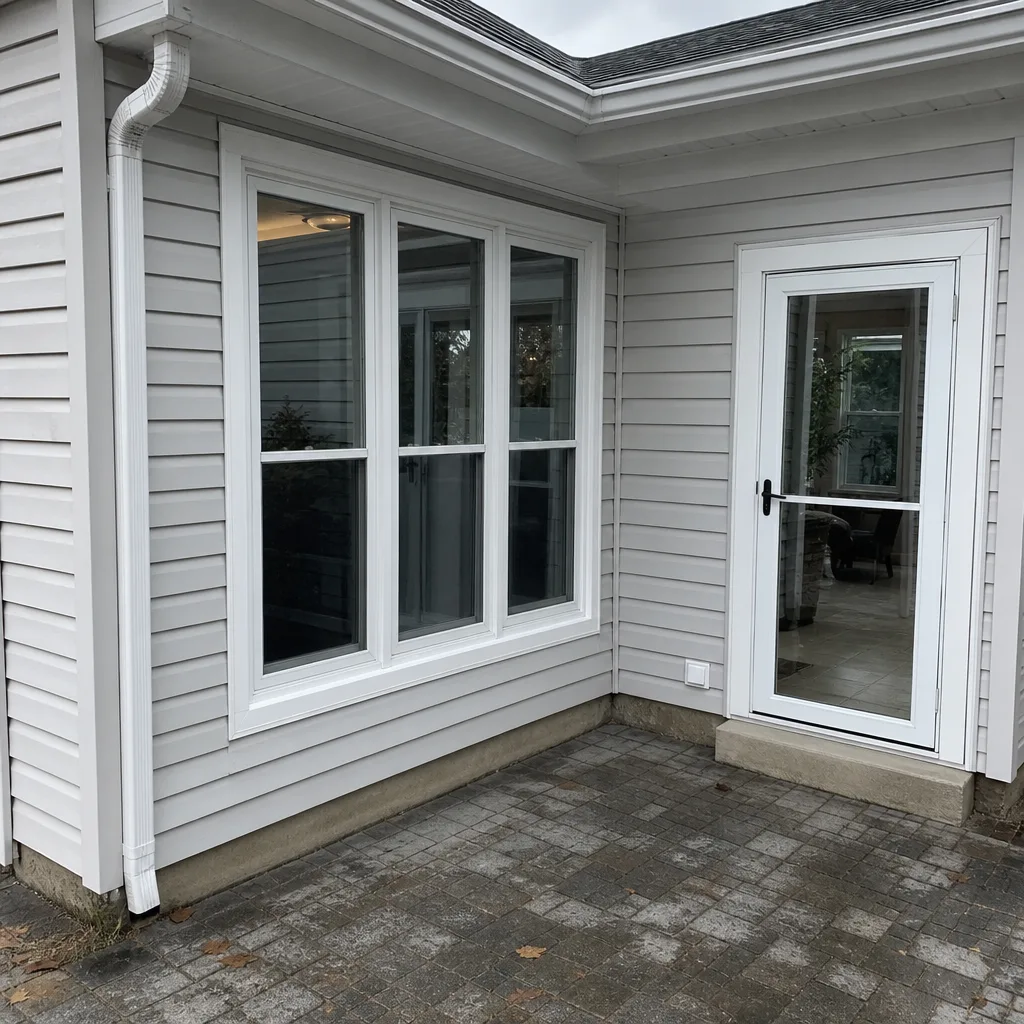
Check caulk and weatherstripping at all openings. In Hackensack’s older housing stock, particularly the pre-war homes near Hackensack University Medical Center and along Prospect Avenue, original windows often have failed glazing compound or modern replacement windows with deteriorated sealant. Wind-driven rain during nor’easters penetrates these gaps.
Photograph the seal condition at each opening. Note any recaulking or weatherstripping replacement with product name and date.
Annual Baselines: Moisture Readings and Material Inventories
This is the section most homeowners skip, and it’s the section that wins disputed claims. Annual baseline readings create a documented “before” state. When water damage occurs, comparison readings prove the extent and timing of intrusion.
Moisture Content Baselines by Room
Using a pinless moisture meter (available for $40-80 from hardware stores, or borrowed), record readings at standard locations in each room:
| Location | Reading Points | Normal Range | Flag Threshold |
|---|---|---|---|
| Basement perimeter walls | 12″, 24″, 36″ from floor, every 6 feet | 6-12% | >15% |
| First-floor exterior walls | 12″ from floor, at windows and corners | 6-10% | >13% |
| Subfloors (if accessible) | Center of bays, near plumbing | 8-12% | >16% |
| Crawl space joists | Random sample of 5 locations | 10-16% | >20% |
| Attic sheathing | North and south slopes, near ridge and eaves | 6-12% | >15% |
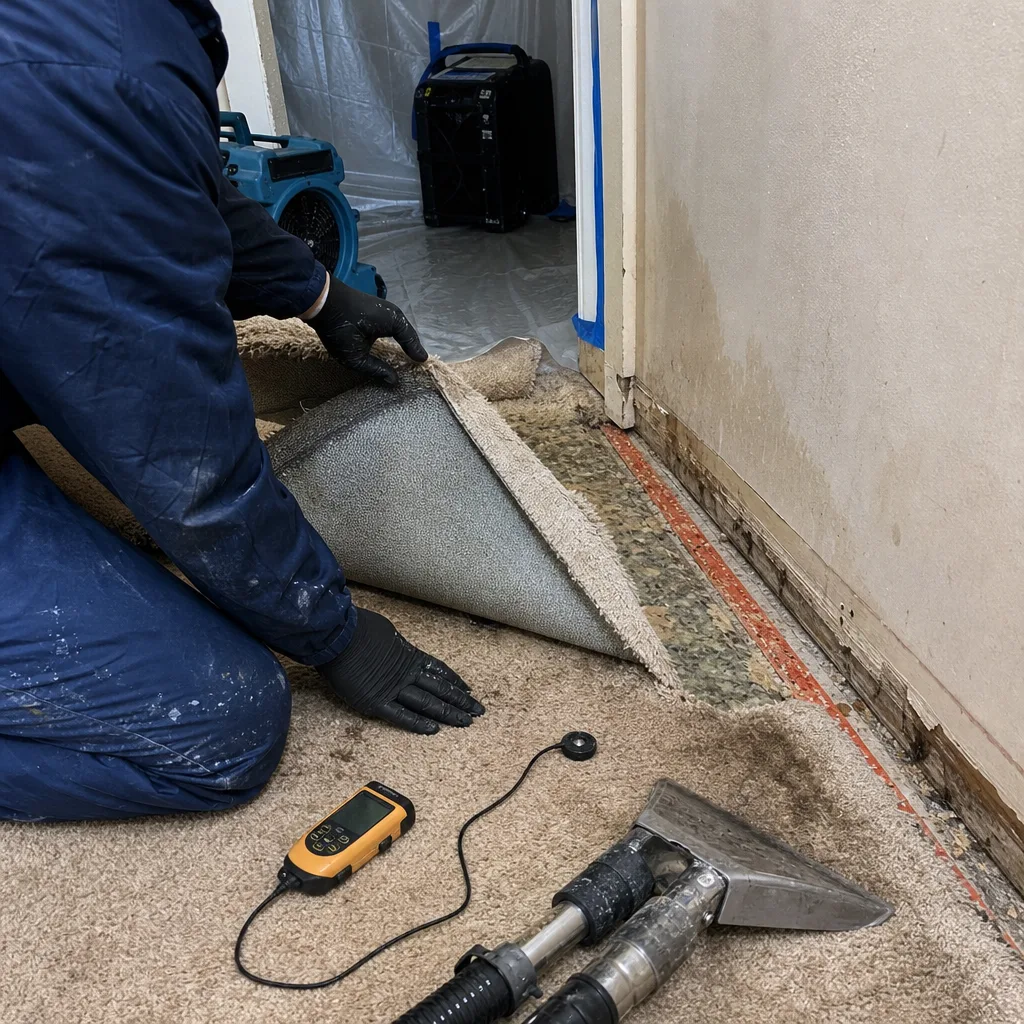
Record these in your log with the meter brand and model, calibration date if known, and your name. Photograph the meter display at each reading location. This produces psychrometric data, which is simply the measurable moisture condition of your building materials, documented to a standard that IICRC-certified restorers like our crews use daily.
In Hackensack’s humid summers, baseline readings will run higher than in winter. That’s normal. What matters is the annual comparison and the trend. A wall that read 8% last year and 14% this year has a water source, even if visible damage hasn’t appeared.
Appliance and System Age Inventory
Document the age and expected service life of water-connected appliances:
- Water heater (serial number decodes to manufacture date; life expectancy 10-12 years)
- Washing machine hoses (replace every 5 years; log installation date)
- Dishwasher supply line and drain hose
- Refrigerator ice maker line
- HVAC condensate pump and drain line
- Sump pump (replace every 7-10 years; log installation date)
Photograph each nameplate or label. This inventory prevents the “known old equipment” denial argument. A water heater that fails at 14 years, with no replacement plan documented, is treated differently than one that failed at 9 years with a logged annual inspection noting “plan replacement at 10 years.”
Material Classification for Insurance
Insurers classify building materials by permeance, which affects drying protocols and claim valuation. Note in your annual log:
- Floor coverings by room: solid hardwood (class 4, slow drying), engineered wood (class 3), vinyl or tile (class 2), carpet over pad (class 3)
- Wall finishes: plaster (class 4), drywall (class 3), paneling (varies)
- Subfloor material: plywood, OSB, or plank
This information, recorded calmly in advance, accelerates accurate scope writing if damage occurs. Our crews at DryMark Restoration Hackensack home use this same classification system, documented to IICRC standards, to produce drying logs that insurers accept without challenge.
Your Maintenance Log Template
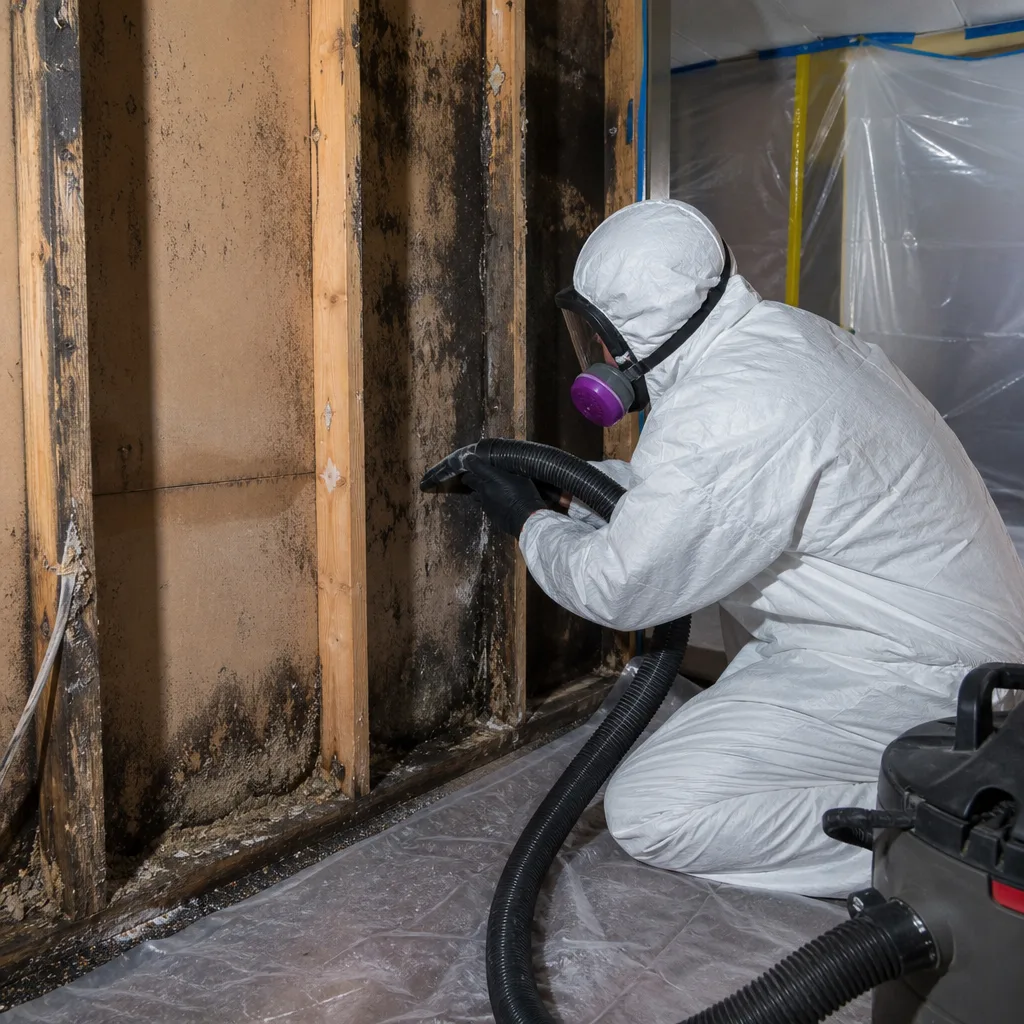
The log is the product. Without it, you’ve performed maintenance but can’t prove it. For additional help, browse more guides & resources. Use this format, digitally or in a bound notebook that cannot have pages removed:
| Field | Entry Example |
|---|---|
| Date | October 15, 2024 |
| Task performed | Roof inspection, south and west elevations; gutter cleaning and flush test |
| Tools used | Binoculars, ladder, hose, iPhone 14 |
| Readings recorded | Attic sheathing: north 9%, south 11% (pinless meter, Protimeter Surveymaster) |
| Conditions found | Three missing shingles at valley, south elevation; one loose gutter hanger at northeast corner |
| Actions taken | Photographed all; scheduled roofer for November 2; tightened hanger with drill |
| Performed by | [Your name, printed and signed] |
| Photo file names or references | IMG_4521 through IMG_4528 |
Store digital photos in dated folders with cloud backup. Print key photos annually and attach to a physical log if you maintain one. The goal is redundancy: if your phone dies, the cloud backup survives; if the cloud service fails, the physical log survives.
For Hackensack homeowners, we recommend including one additional field: Weather context. Note recent rainfall, temperature extremes, or storm events. “Performed check 48 hours after 3-inch rainfall on October 12” establishes that your inspection occurred under relevant conditions, not in convenient dry weather.
Common Mistakes to Avoid
- Performing checks without photographing them. A log entry without photographic evidence is testimony, not documentation. Insurers weigh testimony against their adjuster’s photos of visible damage.
- Using vague descriptions like “looks good” or “no issues.” Record specific conditions: “No staining, moisture reading 8%, no movement at toilet base.” Specificity is credibility.
- Skipping the backwater valve because it’s unpleasant to access. In Hackensack’s combined sewer areas, this is the single most important quarterly check. The access port is designed for maintenance; use it.
- Testing the sump pump only by lifting the float manually. This verifies switch function, not pump capacity. The 5-gallon water pour tests the full system under realistic load.
- Recording only problems, not normal conditions. A baseline of normal readings proves that a later abnormal reading represents new damage, not pre-existing condition.
- Letting the log live only on one device. Phones fail, accounts get locked, apps stop working. Maintain cloud backup and annual physical summary.
- Ignoring the age inventory until something fails. Document equipment age when installed, update annually, and plan replacement before failure. A failed 14-year-old water heater is a foreseeable event; a replaced-at-10-years heater that failed is a covered peril.
When to Call a Professional
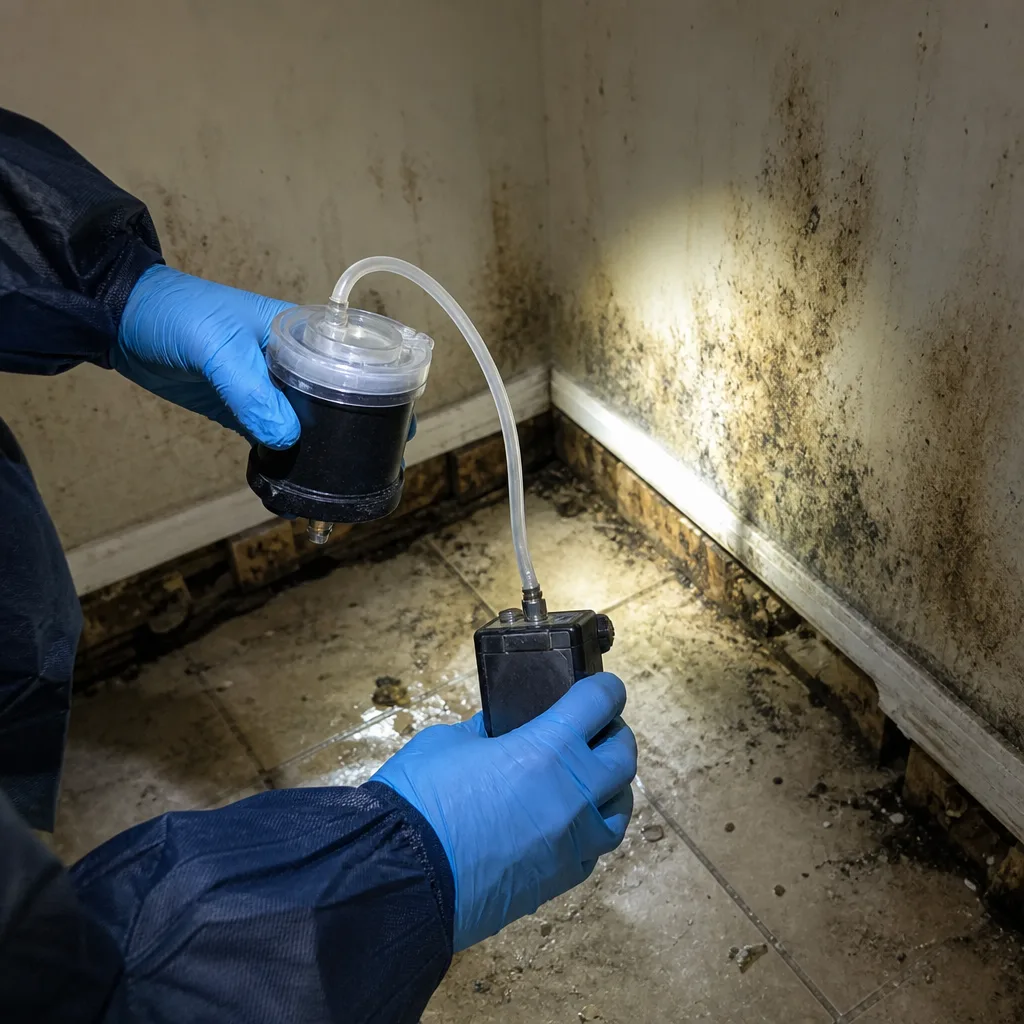
Some conditions require immediate professional assessment, not continued logging. Call a licensed plumber or restoration contractor if you find: moisture readings rising 5+ percentage points from your annual baseline; visible mold growth of any size; sewage backup or backwater valve failure; water heater tank leakage (not just valve dripping); or structural movement in foundation walls. These conditions worsen nonlinearly; delay increases damage and claim complexity.
If water damage has already occurred, document everything before calling, then call immediately. Photograph the water line, the source if identifiable, and all affected materials. Then contact DryMark Restoration Hackensack. We provide free estimates in Hackensack, and our crews arrive with moisture meters, thermal imaging, and the documentation protocols that produce payable claims. Call (551) 213-3409. Every job begins with a written price before work starts, per Haven Standard, Clause 1, and includes a photo record on every visit.
Frequently Asked Questions
Coverage depends on the water source and your documentation. Sudden, accidental discharge from plumbing or appliances is typically covered. Slow leaks, groundwater intrusion, and sewer backup require specific endorsements and proof that the damage was not from long-term neglect. A dated maintenance log is your primary evidence against the “seepage over time” exclusion common in NJ policies. Call (551) 213-3409 for a free estimate if you’re unsure whether your situation qualifies.
For active water damage, speed matters because moisture migrates into structural materials within hours. DryMark Restoration Hackensack answers calls live 24 hours a day, 7 days a week with no voicemail on emergency lines. Response time depends on current call volume and weather events, but our dispatch prioritizes active water flow and sewage contamination. For non-emergency assessments, we schedule within 24-48 hours and provide a written price before any work begins.
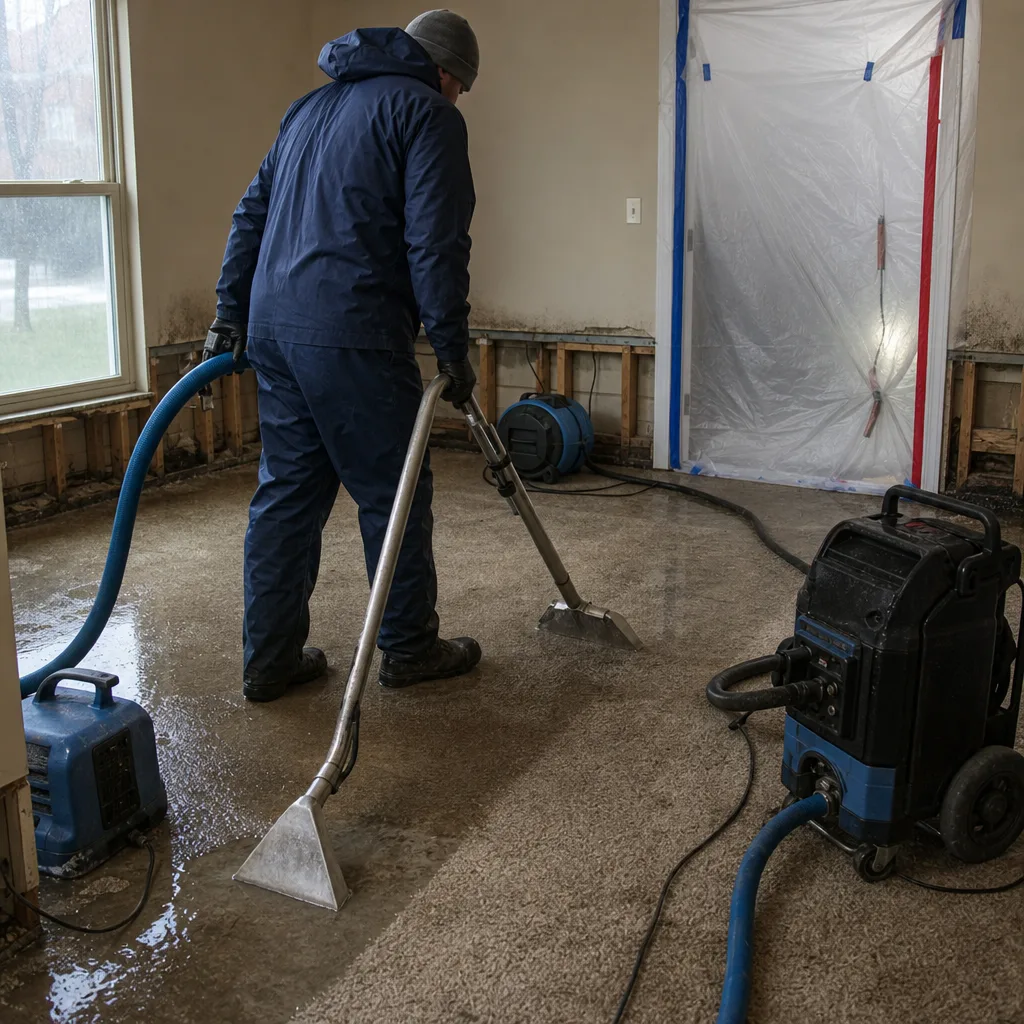
Surface drying with household fans addresses visible water, not the moisture trapped in wall cavities, subfloors, and insulation. Professional drying uses psychrometric calculations, vapor pressure differential management, and equipment like Injectidry systems and Dri-Eaz dehumidifiers to remove bound moisture from materials. Without this, mold growth in Hackensack’s humid climate is likely within 48-72 hours. Our crews document every drying phase to IICRC standards, producing the logs that support your claim.
We coordinate directly with adjusters as part of our standard service. Our documentation, photo records, and written scopes are formatted for insurance review. We do not require you to manage adjuster communications, though you remain the policyholder and must authorize all claim-related decisions. The Haven Standard requires that our written price precede work and that our documentation supports claim payment.
Costs vary by affected square footage, material types, water classification (clean, gray, or black), and required drying duration. Minor clean water extraction and drying may range from $1,200-$3,500. Category 3 sewage backup with structural drying and material removal can exceed $8,000-$15,000. Reconstruction is priced separately after drying completes. DryMark Restoration Hackensack provides a written price before any work starts, with no scope additions once the crew is inside, per Haven Standard, Clause 1. Call (551) 213-3409 for a specific estimate.
Stop the water source if safe to do so: shut off the main valve for plumbing leaks, or the appliance supply for dishwasher or washing machine failures. Do not enter standing water if electrical outlets may be submerged. Photograph everything before moving or removing anything. Then call for professional assessment. If mold is visible or suspected, avoid disturbing it, as this releases spores. Our crews handle water source identification, safe electrical assessment, and documentation in sequence.
Hackensack’s freeze-thaw cycle, humid summers, and coastal storm exposure create year-round water risk. Spring snowmelt drives groundwater; summer humidity slows natural drying; fall nor’easters test roofs and drainage; winter freezes burst pipes. We recommend the quarterly schedule aligned to these risks: March (thaw/pre-rainy season), June (hurricane season), September (peak storm risk), and December (pre-freeze). Annual moisture baselines should be taken in May, after spring rains but before summer humidity peaks, for consistent year-to-year comparison.
The Bottom Line
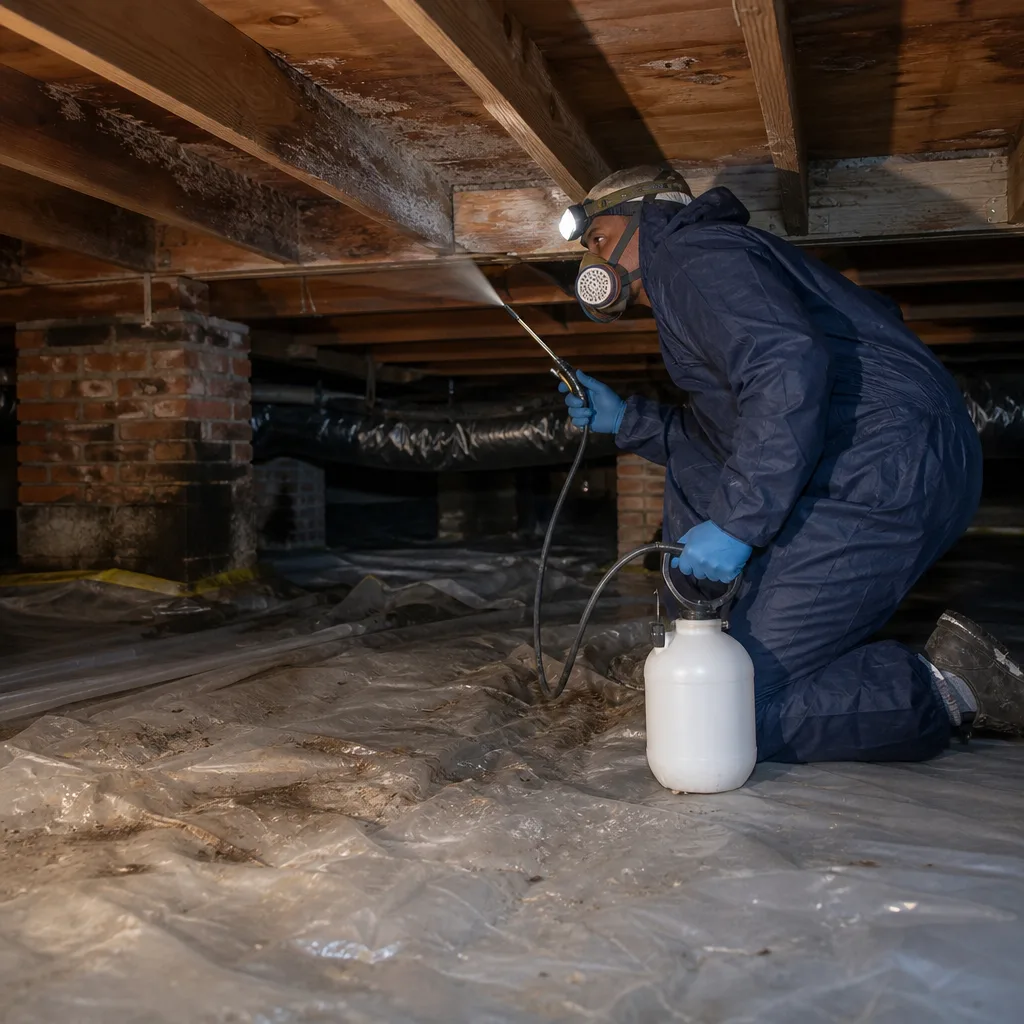
A maintenance checklist prevents water damage only if it produces evidence. In Hackensack’s insurance environment, where “continuous seepage” exclusions deny claims routinely, the dated log with photographs and readings is as important as the maintenance itself. Perform monthly checks of visible plumbing, quarterly tests of sump pumps and backwater valves, semi-annual roof and gutter inspections timed to nor’easter season, and annual moisture baselines by room. Record every task with date, tool, reading, finding, action, and your name. Store redundantly. This discipline, maintained over years, turns a potential claim denial into a documented, payable loss. The time invested is measured in hours per year; the protection is measured in tens of thousands of dollars of covered damage.
Written by Alicia Brennan, Owner at DryMark Restoration Hackensack, serving Hackensack since 2011.