
Last updated September 23, 2026
Free visual inspection and a written scope of work before any mitigation begins - photos, moisture readings, and drying logs go in your claim file
The scope we write is the scope we bill. Anything new gets shown to you, in writing, before we touch it.
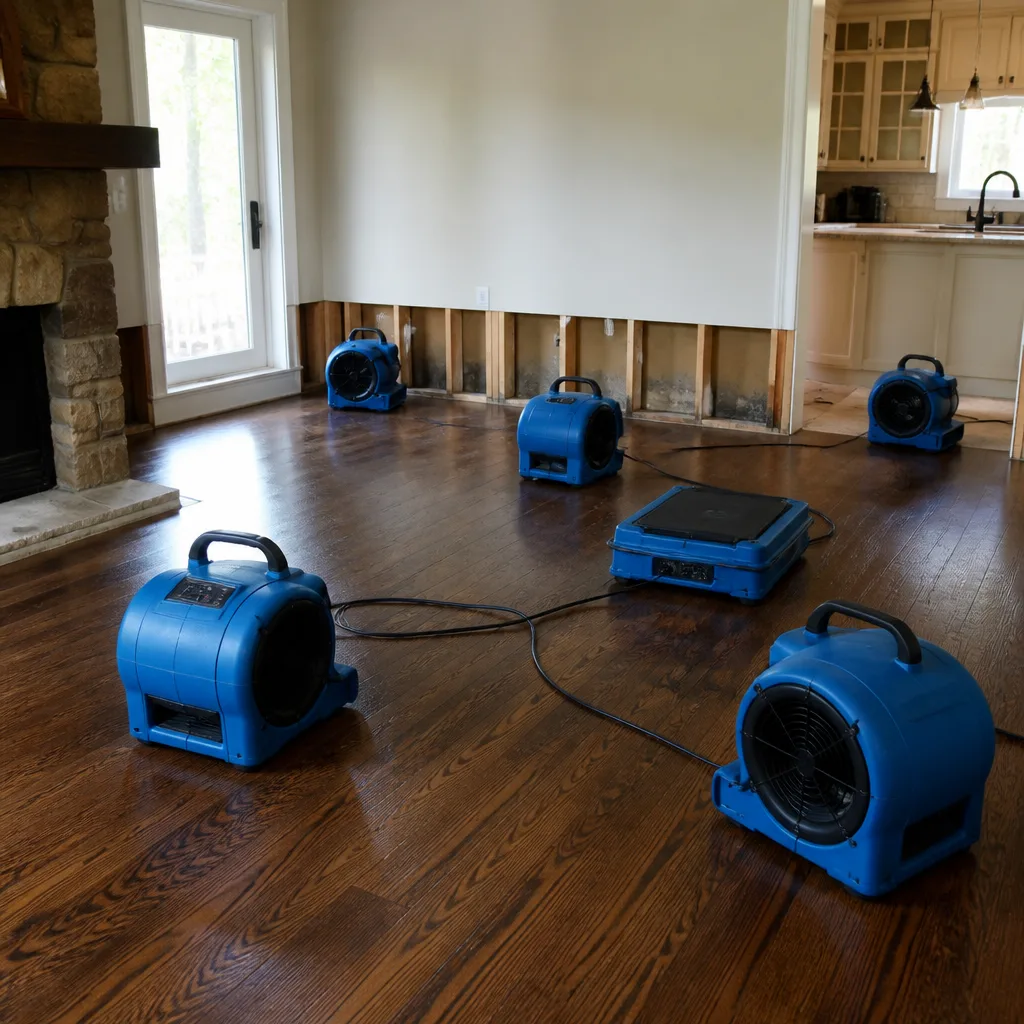

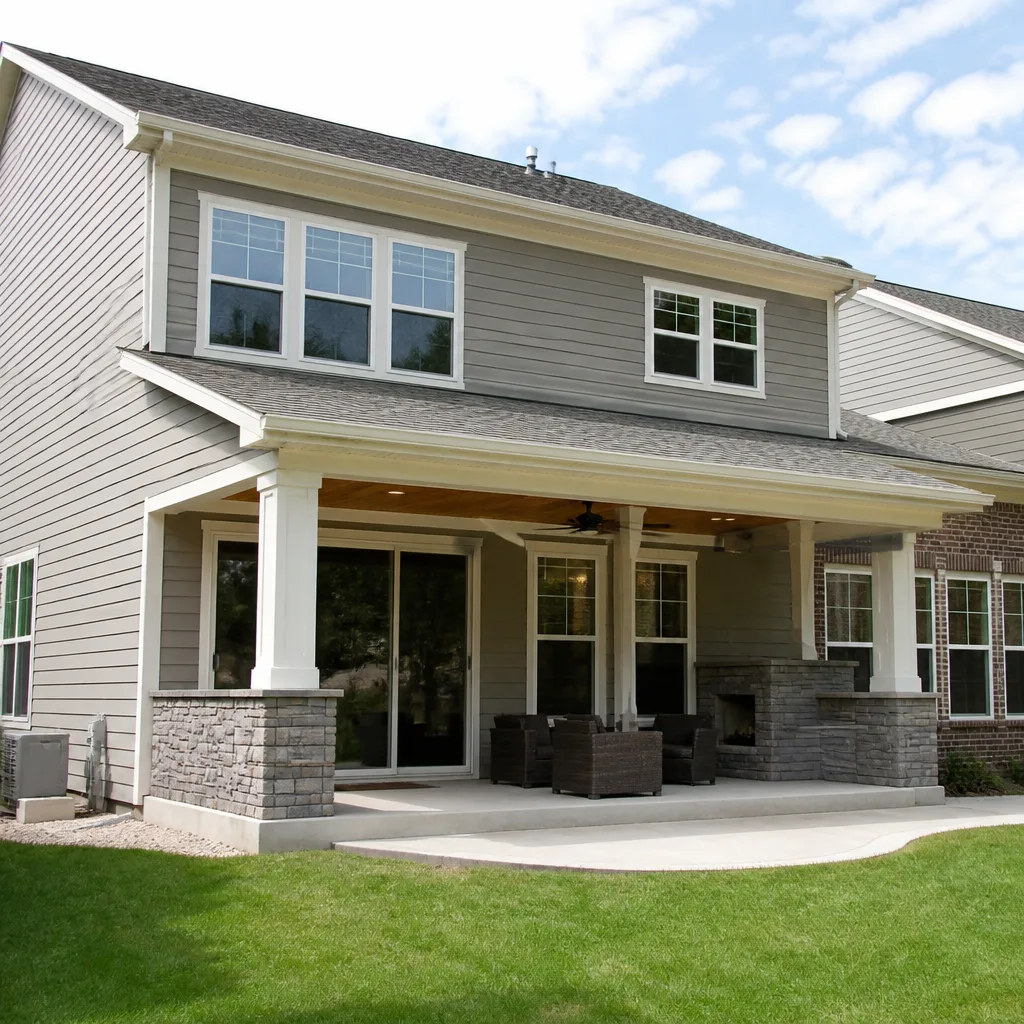
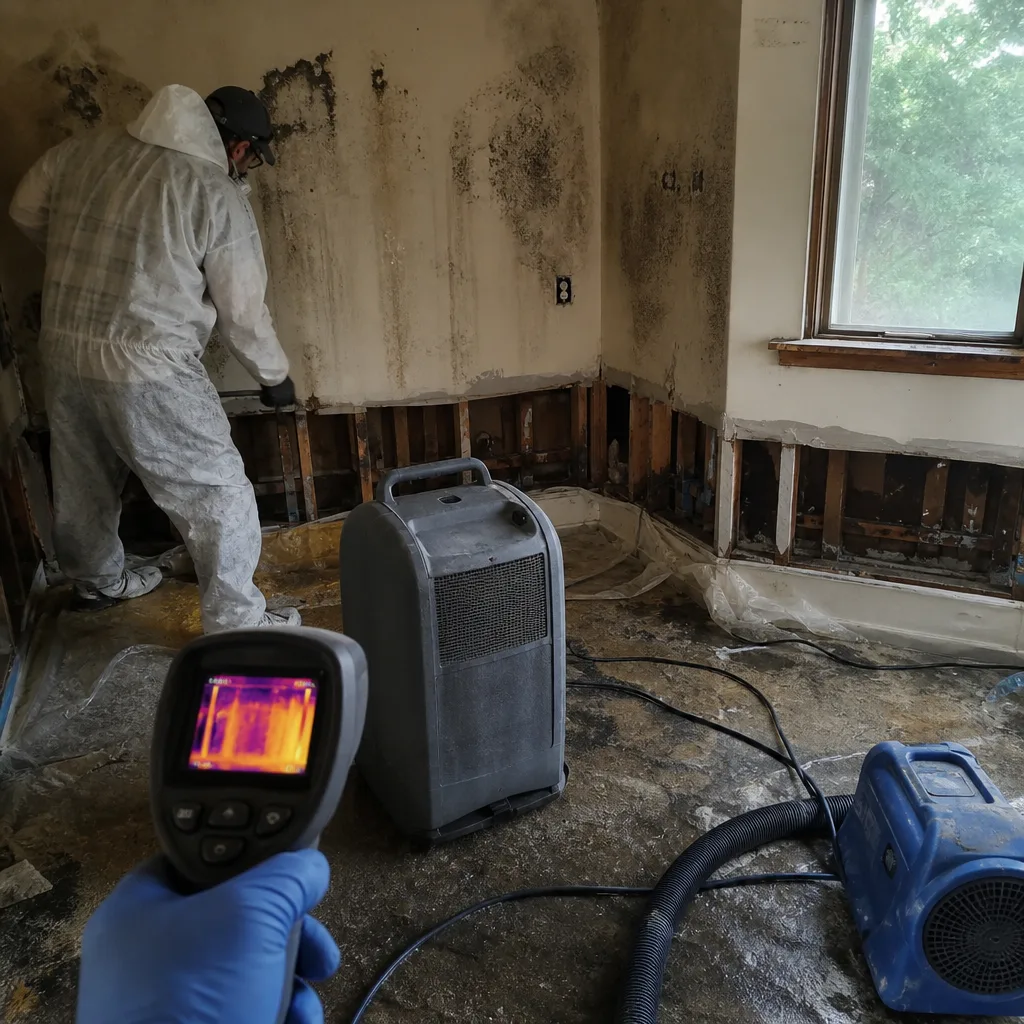 Before
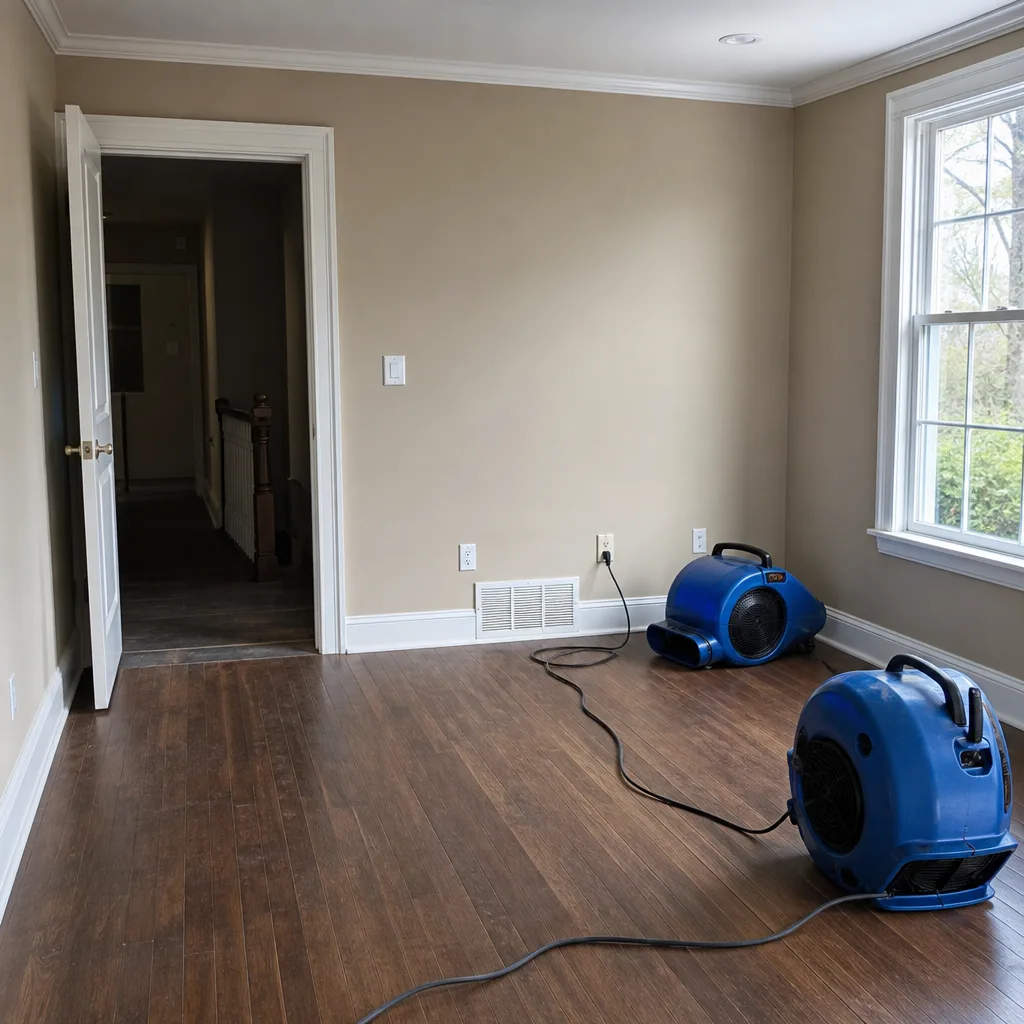 After
After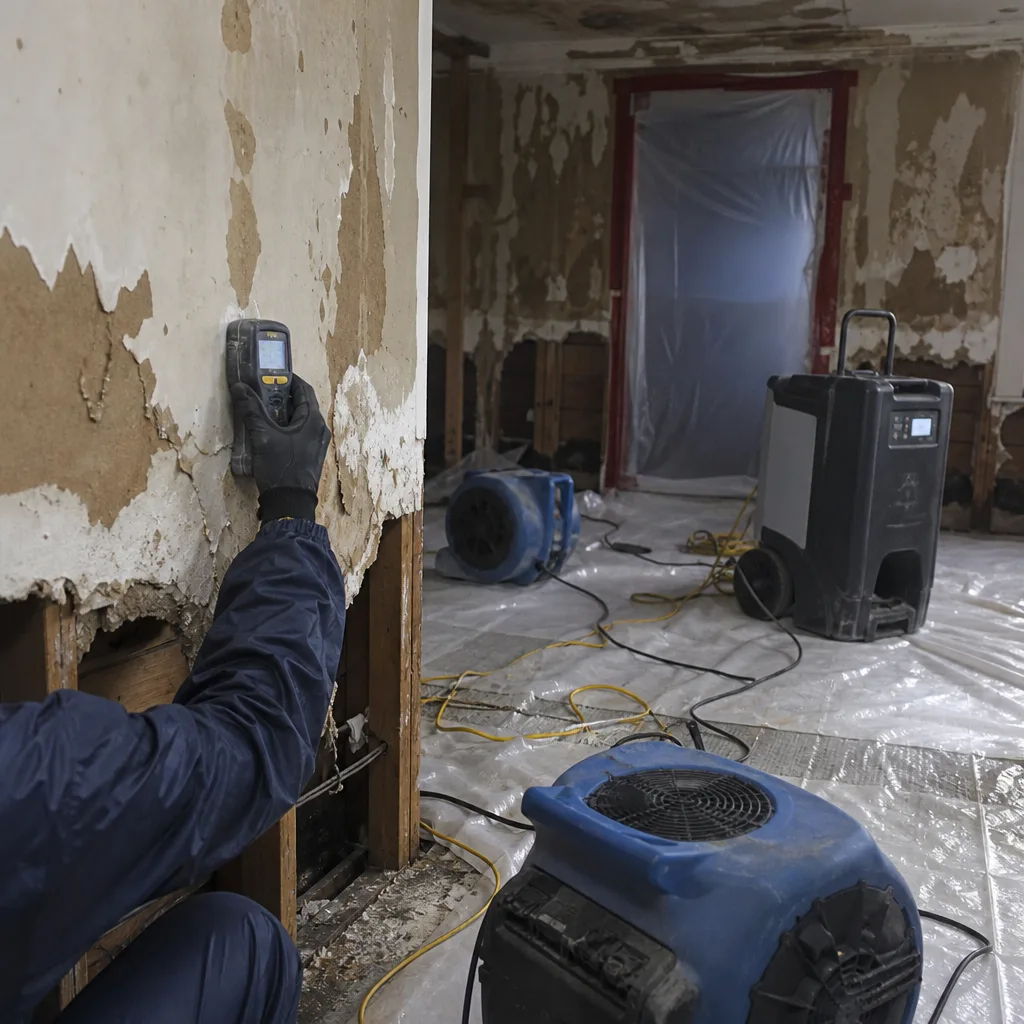 Before
 After
After Before
 After
AfterSeasonal Damage Restoration Care for Hackensack: Year-Round Homeowner’s Guide
Bergen County FEMA flood claim data shows that two windows - late February through March snowmelt and the August-September tropical remnant season - account for a disproportionate share of residential water intrusion events, yet most seasonal guides treat every month as equally risky. Hackensack’s geography makes this especially costly. The city sits at low elevation bisected by the Hackensack River, with neighborhoods like Fairmount and Hackensack Heights experiencing different drainage pressures than areas near Johnson Park or the riverfront. In this guide, you’ll learn which months actually matter for your specific risks, what to inspect, and how to read early warning signs before they become documented losses. For a broader overview, see our Complete Guide to Damage Restoration in Hackensack.
Quick Answer
Homeowners in Hackensack should concentrate their prevention efforts on two high-risk windows: late February through March, when snowmelt combines with frozen ground to force water into basements, and August through September, when tropical remnants drop heavy rain on already saturated soil. Between these peaks, summer HVAC condensate failures and fall gutter blockages create secondary risks. The most effective seasonal care is a documented inspection routine calibrated to this actual risk calendar, not a generic monthly checklist - for a detailed task list, see our Water Damage Restoration Maintenance Checklist for Hackensack Homeowners.
Table of Contents
- The Hackensack Risk Calendar: When Damage Actually Happens
- Winter Preparation: Sump Pump, Foundation, and Freeze Protection
- Spring Thaw: Reading Your Basement or Crawl Space Correctly
- Summer Moisture: Flat Roofs, HVAC Systems, and Humidity Control
- Fall Drainage: Gutters, Downspouts, and Foundation Grading
- Year-Round Documentation: What to Record and When
- Common Mistakes to Avoid
- When to Call a Professional
- Frequently Asked Questions
- The Bottom Line
BeforeAfterThe Hackensack Risk Calendar: When Damage Actually Happens
Generic seasonal guides distribute attention evenly across twelve months. For Hackensack, that’s inefficient. The city’s specific geography - 20 to 40 feet above sea level in most neighborhoods, with the Hackensack River running through its center and the Meadowlands to the east - creates concentrated risk periods that don’t match inland New Jersey patterns.
Primary Risk Window 1: Late February through March
Snow accumulation in Bergen County averages 25 to 30 inches annually, with significant variation year to year. The critical factor isn’t total snowfall; it’s the freeze-thaw cycle. When ground remains frozen at depth while air temperatures rise above freezing, meltwater cannot percolate downward. It runs laterally across impermeable frozen soil toward foundations. In Hackensack’s older neighborhoods - particularly around Main Street and the areas developed before modern basement waterproofing codes - this lateral pressure finds gaps in mortar joints, deteriorated sealant, and window wells that lack proper drainage.
We’ve documented this pattern repeatedly. In March 2018, following a rapid thaw after a prolonged freeze, we responded to multiple calls in the Fairmount section where water entered through hairline cracks that had been dry for decades. The moisture readings at those foundations showed saturation levels of 28 to 32 percent in concrete - well above the 20 percent threshold where microbial growth becomes viable within 48 to 72 hours.
Primary Risk Window 2: August through September
Tropical systems and their remnants track up the East Coast with increasing frequency. Hackensack’s position - downstream from the Ramapo Mountains and adjacent to the Hackensack River floodplain - means it receives concentrated runoff from upstream watersheds even when local rainfall seems moderate. The August 2011 storm (Tropical Storm Irene’s remnants) produced river levels that exceeded the 100-year flood elevation at the Hackensack gauge, affecting properties outside mapped flood zones.
Summer convective storms add secondary risk. The urban heat island effect in downtown Hackensack and along Route 46 can intensify localized rainfall by 5 to 15 percent compared to surrounding suburban areas. Flat roofs common on Hackensack’s commercial buildings and some residential structures absorb this thermal loading, accelerating membrane fatigue.
Secondary Risk Periods
- June through July: HVAC condensate drain failures peak as cooling load increases. Condensate lines that were adequate in May become overwhelmed or clogged with biological growth.
- October through early November: Leaf accumulation in gutters coincides with increased rainfall frequency. Hackensack’s mature tree canopy, particularly in the Hackensack Heights and Summit Avenue areas, produces significant debris loads.
- December through mid-February: Pipe freeze risk is moderate in Hackensack due to urban density and underground utility placement, but perimeter rooms in older homes with minimal insulation remain vulnerable during extended cold snaps below 15°F.
This calendar should guide where you invest inspection time. A thorough March basement check and an August roof and drainage inspection will prevent more damage than spreading equal effort across all months.
Winter Preparation: Sump Pump, Foundation, and Freeze Protection
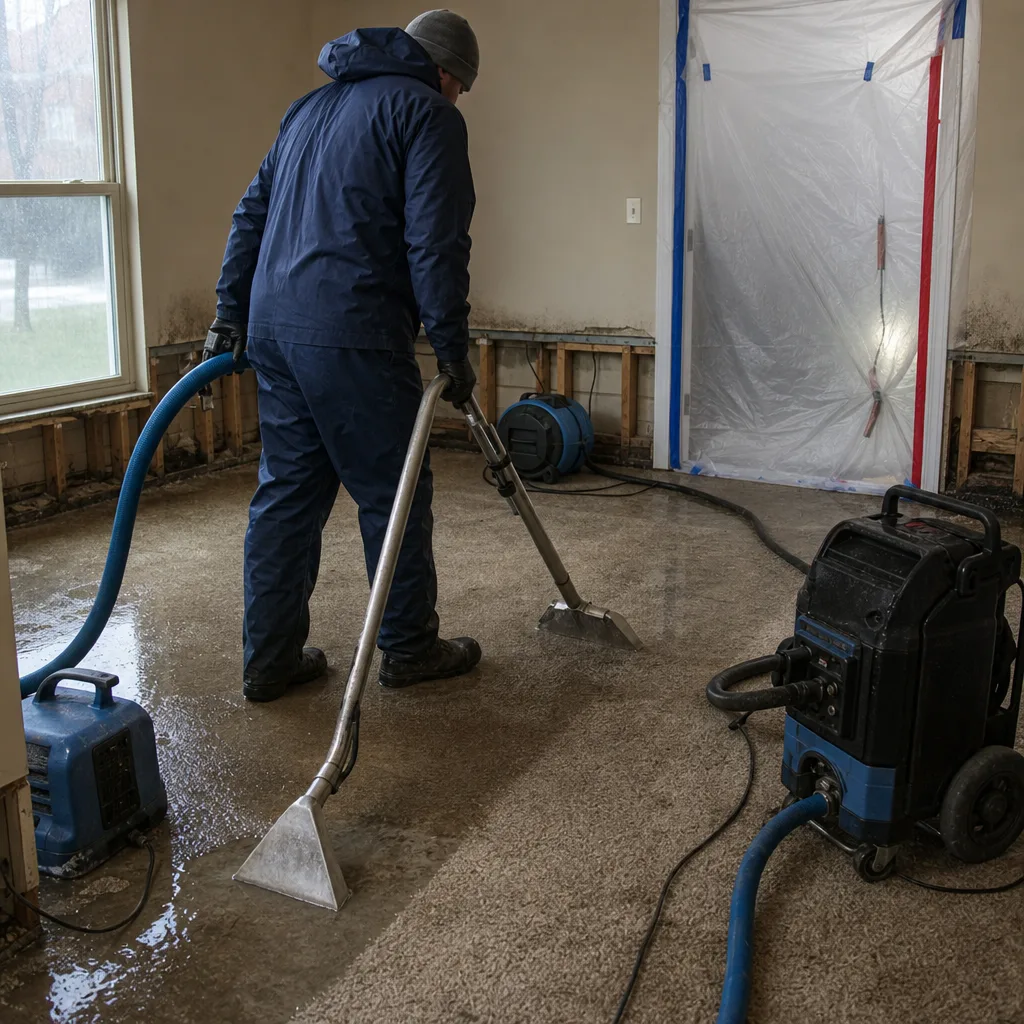
Pre-winter preparation in Hackensack should focus on three systems: sump pump reliability, foundation envelope integrity, and pipe freeze protection in vulnerable zones. The goal is surviving the late February through March window with dry basement air below 60 percent relative humidity and foundation moisture readings below 20 percent.
Sump Pump Testing Protocol
Most sump pump failures we encounter in Hackensack aren’t pump motor failures - they’re switch failures, power interruptions, or discharge line freeze. Test your system using this procedure, documented with photos for your records:
- Float trigger test: Slowly pour 5 gallons of water into the sump pit until the float rises and activates the pump. The pump should start before water reaches the inlet of the discharge pipe. Time the cycle: from activation to pump-off should be 10 to 30 seconds for a properly sized system. If the pump runs continuously or cycles rapidly, the float may be waterlogged or the pump may be undersized for your groundwater load.
- Check valve verification: After the pump shuts off, listen for water flowing back into the pit. A functioning check valve prevents this backflow, which would cause rapid cycling and premature motor wear. The check valve should be installed on the vertical discharge pipe 6 to 12 inches above the pump discharge outlet.
- Discharge line inspection: Trace the discharge line to its termination point. In Hackensack, where frost penetration can reach 30 to 36 inches in severe winters, above-ground discharge lines are vulnerable to freeze blockage. The discharge should terminate at least 10 feet from the foundation and slope continuously away from the house. If your discharge line is above grade, consider installing a buried extension to below frost depth before the ground freezes.
- Battery backup load test: If you have a battery backup pump, unplug the primary pump and trigger the backup with water. Note the runtime: most battery systems provide 4 to 7 hours of intermittent pumping. Replace batteries every 3 to 4 years regardless of apparent condition; we’ve documented backup failures in Hackensack homes where batteries held voltage but lacked sufficient amp-hour capacity under load.
Homes built before Hackensack updated its basement code requirements in the mid-1990s often have sump pits that are too shallow or too narrow for modern high-capacity pumps. If your pit is less than 18 inches in diameter or less than 24 inches deep, the pump may short-cycle during high groundwater events, leading to premature failure during the exact conditions when you need it most.
Foundation Envelope Inspection
Walk the perimeter of your foundation during dry weather. Look for:
- Cracks in mortar joints wider than 1/8 inch, particularly at the junction between foundation walls and the sill plate
- Deteriorated or missing sealant around penetrations for utilities, dryer vents, or former window openings
- Window wells that hold water more than 30 minutes after rainfall
- Soil line below the top of the foundation in any area, exposing the joint between foundation and framing
Document each finding with a photo and note its location. These records become valuable if you need to file an insurance claim; they establish pre-existing condition and maintenance history.
Pipe Freeze Protection
In Hackensack’s older housing stock, particularly the pre-war homes near Central Avenue and the areas with minimal insulation in exterior walls, pipe freeze remains a real risk when temperatures drop below 15°F for more than 24 hours. Focus on:
- Pipes in exterior walls of kitchens and bathrooms, especially on north-facing walls
- Supply lines to hose bibs that lack frost-proof sillcocks
- Any plumbing in unheated crawl spaces or attached garages
Insulation alone is often insufficient in extreme cold. We recommend adding heat cable to vulnerable runs, controlled by a thermostat set to 38°F, and ensuring that crawl space vents are closed and sealed during winter months.
Spring Thaw: Reading Your Basement or Crawl Space Correctly
March and April produce more confused homeowners in Hackensack than any other season. The basement that was dry in January now shows moisture on walls, efflorescence on concrete, or a musty odor. The critical skill is distinguishing transient condensation from active water intrusion - these conditions require completely different responses, and misreading them leads to unnecessary remediation expense or missed early intervention.
Transient Condensation
When cold foundation walls meet warming, humid spring air, surface condensation forms. This is pure physics: concrete at 45°F in contact with air at 65°F and 70 percent relative humidity will sweat. The moisture appears uniformly on cold surfaces, has no visible point of origin, and doesn’t leave a water line or staining pattern. A moisture meter reading of the concrete surface will show 100 percent at the surface layer only, with rapid decline at 1/4 inch depth.
Condensation management requires dehumidification and air circulation, not waterproofing. A properly sized dehumidifier maintaining 50 to 55 percent relative humidity will eliminate the problem. We’ve seen Hackensack homeowners spend thousands on interior drainage systems for condensation that a $300 dehumidifier would have solved.
Active Intrusion
Active water intrusion tells a different story. Look for:
- Water entering at a specific point: crack, joint, or penetration
- Staining patterns that show direction of flow, often with sediment deposits
- Moisture that persists or worsens during and after rainfall, rather than appearing during warm, humid periods regardless of precipitation
- Moisture meter readings that remain elevated at depth - 20 percent or higher at 1/2 inch into concrete or masonry
- Efflorescence (white mineral deposits) that is active and growing, indicating ongoing water movement through the material
Active intrusion requires source control: exterior grading, gutter management, crack injection, or drainage system installation. The remediation path depends on the source, which is why documentation matters. Water damage restoration in Hackensack should begin with a written scope identifying the source, not a proposal for the most expensive intervention.
What to Document in Spring
During the first warm week of March, conduct a systematic inspection:
- Photograph all foundation walls from corner to corner, with date stamps
- Record moisture meter readings at 12-inch intervals, 6 inches above floor level
- Note ambient temperature and relative humidity
- Map any active water to its entry point with photos
- Check sump pump operation using the protocol in the winter section
Repeat this documentation after the next significant rainfall. Comparing the two records reveals whether you’re seeing condensation or intrusion. This is the documentation approach that turns restoration invoices into payable claims: specific, dated, measured, and comparable.
Summer Moisture: Flat Roofs, HVAC Systems, and Humidity Control
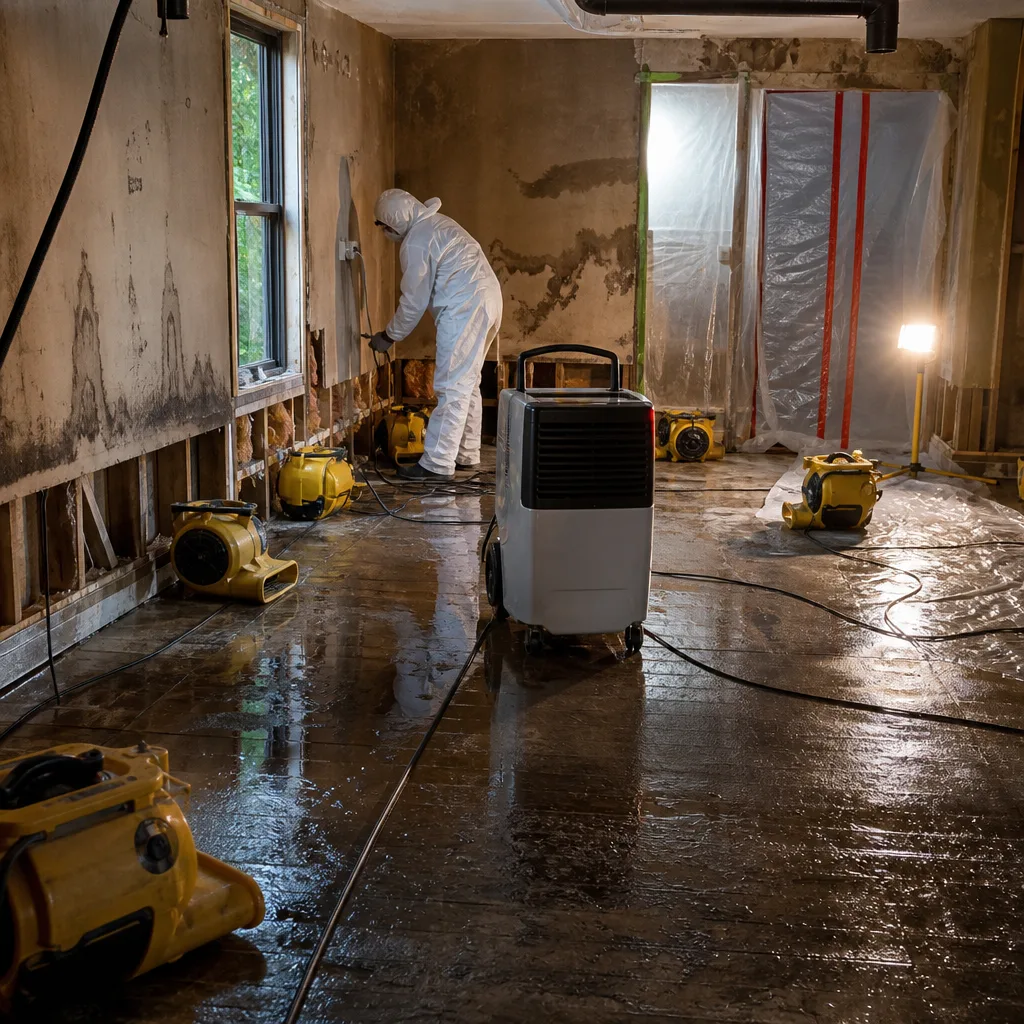
Summer in Hackensack brings a different moisture profile than spring. The threat shifts from groundwater pressure to airborne humidity, roof membrane failure, and HVAC condensate mismanagement. July and August produce the highest absolute humidity readings of the year, and the combination of thermal loading on flat roofs and continuous air conditioning creates multiple pathways for water damage.
Flat Roof Inspection
Flat roofs are common on Hackensack’s commercial buildings and increasingly on residential additions and modern construction. They’re not actually flat; they carry a minimum 1/4 inch per foot slope to drains. The problem is that this subtle pitch is easily lost to structural settlement, improper installation, or debris accumulation.
Inspect your flat roof twice during summer: once in mid-July after the first sustained heat wave, and again in late August before tropical season peaks. Look for:
- Ponding water that remains 48 hours after rainfall - indicates inadequate slope or blocked drains
- Membrane bubbles or blisters, which trap moisture and expand with heat cycling
- Cracks at parapet walls, penetrations, and expansion joints, where thermal movement concentrates stress
- Drain strainers that are clogged with leaves, particularly on roofs below Hackensack’s mature oak and maple canopy
We documented a case in 2019 on a commercial property near Route 46 where ponding water on a modified bitumen roof reached 3 inches depth during a July heat wave. The water acted as a solar collector, accelerating membrane degradation and eventually breaching at a seam. The interior damage - wet insulation, saturated gypsum board, and secondary mold growth - required removal of 2,400 square feet of roofing and ceiling assembly. A mid-July inspection would have caught the ponding before membrane failure.
HVAC Condensate Management
Air conditioning systems in Hackensack remove 20 to 40 gallons of water daily from indoor air during peak summer conditions. This condensate must drain continuously and completely. Common failure modes we encounter:
- Primary drain lines clogged with algae or biofilm, causing overflow at the air handler
- Condensate pumps that fail silently, with no alarm or overflow sensor
- Secondary drain pans that are rusted through or improperly sloped, allowing water to bypass the pan entirely
- Drain lines routed through unconditioned attics where cold condensate causes secondary condensation on the pipe exterior
Test your condensate system by pouring a gallon of water slowly into the drain pan while the system runs. Water should flow freely through the primary drain with no backup. If you have a condensate pump, verify that it activates and discharges completely. The pump should not retain standing water after cycling.
Moisture Readings That Matter
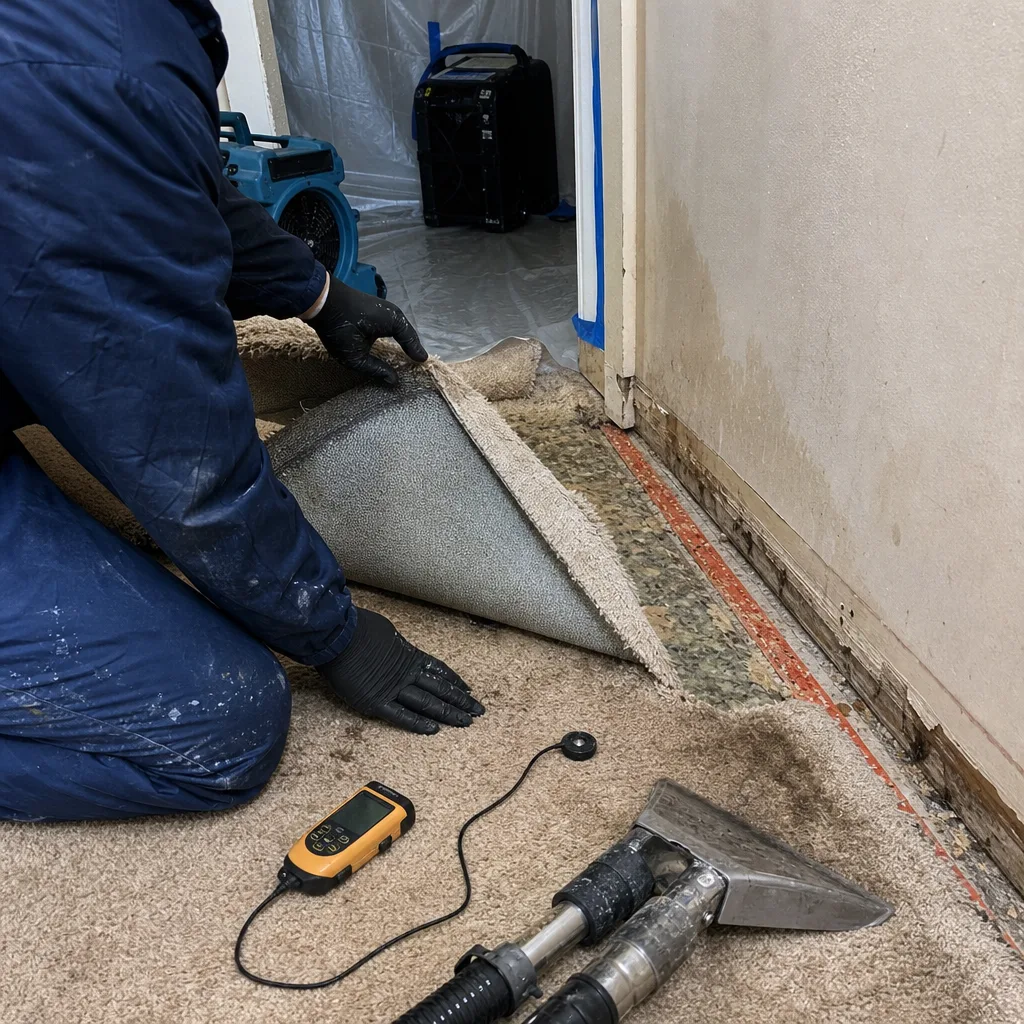
During summer, we recommend homeowners in Hackensack invest in a basic pin-type moisture meter ($40 to $60) and record monthly readings in consistent locations:
- Basement rim joist: should read below 16 percent
- Crawl space floor joists: should read below 20 percent
- Interior drywall at exterior walls: should read below 12 percent
- Attic sheathing: should read below 15 percent
Readings that exceed these thresholds indicate a moisture source requiring investigation. The rim joist is particularly telling in Hackensack’s older homes; it’s the intersection of foundation, framing, and often minimal insulation, making it the first location to show elevated moisture from any source.
Fall Drainage: Gutters, Downspouts, and Foundation Grading
Fall preparation in Hackensack is about ensuring that every gallon of roof runoff is directed away from your foundation before the ground freezes and becomes impermeable. The work you do in October determines how your property handles the March snowmelt.
Gutter and Downspout Verification
Clean gutters are necessary but not sufficient. The entire system must move water from roof to ground to away from foundation without interruption. Inspect:
- Gutter slope: Standing water in gutters between rainfalls indicates inadequate slope toward downspouts. Gutters should slope 1/16 inch per foot minimum toward the downspout, or 1/8 inch per foot for long runs.
- Downspout capacity: A standard 2-by-3-inch rectangular downspout can handle approximately 600 square feet of roof area in moderate rainfall. In Hackensack’s intense summer convective storms, this capacity may be exceeded. If your downspouts overflow during heavy rain, consider upgrading to 3-by-4-inch rectangular or 3-inch round downspouts.
- Discharge distance: Water should discharge at least 6 feet from the foundation, with 10 feet preferred. This is where Hackensack’s lot sizes create challenges. The typical 25-by-100-foot lot in older neighborhoods doesn’t easily accommodate 10-foot above-ground extensions without creating trip hazards or sidewalk interference.
The solution we specify most often in Hackensack is buried downspout extensions in non-perforated 4-inch PVC, sloped to daylight at the rear property line or to a dry well where soil percolation allows. This keeps discharge away from the foundation without surface clutter. Installation cost typically runs $800 to $1,800 depending on length and whether dry well construction is needed, with permits required if the work extends into the sidewalk or street right-of-way. For detailed pricing across all restoration scenarios, see our Damage Restoration Cost Breakdown: The Hackensack Homeowner’s Reference for 2026.
Foundation Grading
Soil should slope away from the foundation at 6 inches of drop per 10 feet of horizontal distance, for at least the first 6 feet. In practice, many Hackensack properties have flat or negative grade due to:
- Settling of backfill around the foundation over decades
- Addition of walkways, patios, or landscaping that interrupts original slope
- Neighboring properties that drain toward shared lot lines
Correcting grade is often the most cost-effective moisture control measure available. We’ve documented cases in the Fairmount area where regrading alone eliminated basement moisture that had previously been attributed to “high water table” requiring interior drainage systems costing 10 times as much.
Fall Documentation
Before the first hard freeze, photograph your gutter system, downspout terminations, and foundation grade from multiple angles. These photos establish condition before winter and provide comparison points for spring inspection. If ice damming occurs in winter, these photos help distinguish between gutter blockage (preventable maintenance) and inadequate insulation/ventilation (building condition).
Year-Round Documentation: What to Record and When
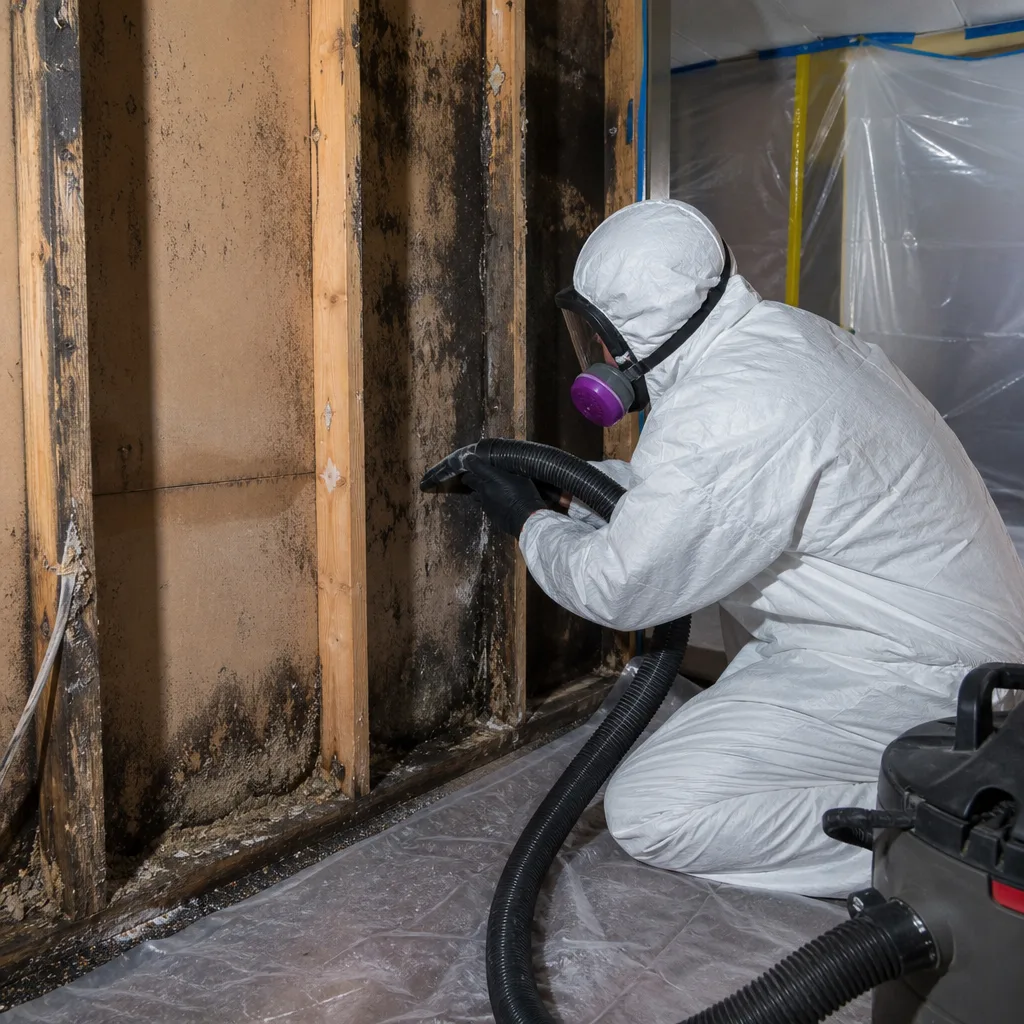
The consistent thread through every season is documentation. Not because paperwork is interesting, but because documented condition determines whether your insurance claim is paid without dispute, whether your contractor’s scope is appropriate, and whether you can prove that a new problem wasn’t pre-existing.
At DryMark Restoration Hackensack, our entire operation is built around this principle. The Haven Standard, which governs every job we perform, requires specific documentation deliverables that we provide as standard, never as an upsell.
What Homeowners Should Maintain
We recommend a simple annual file, digital or physical, containing:
- Spring foundation photos and moisture readings (March)
- Summer roof and HVAC inspection notes (July, August)
- Fall gutter, downspout, and grading documentation (October)
- Winter sump pump test results and any freeze events (December through February)
- All contractor proposals and invoices for any work performed
- Insurance policy declarations and any claim correspondence
This file becomes invaluable if you need fire and smoke damage restoration in Hackensack or any other restoration service. Adjusters review documentation to establish pre-loss condition, determine causation, and validate scope. Homeowners with organized records receive faster claim resolution and more complete coverage.
What Professional Documentation Should Include
If you hire a restoration contractor, the documentation you receive should include:
- Written scope of work with line-item pricing, provided before work begins - this is Haven Standard, Clause 1
- Daily moisture logs showing readings, equipment placement, and psychrometric conditions (temperature, relative humidity, vapor pressure differential)
- Photo record of all affected areas, before, during, and after work
- Material classification by type and salvageability determination
- Equipment deployment logs documenting Dri-Eaz, Phoenix, or comparable professional drying system usage
- Signed completion documentation with 365-Day Done Right Promise
The moisture log is particularly important. It shows whether drying progressed appropriately or whether hidden moisture pockets remained. We’ve reviewed competitor files where drying was declared complete at 18 percent moisture content in structural wood - above the 15 percent threshold where mold risk becomes significant. A proper daily log would have shown this discrepancy.
Psychrometric Data in Plain Language
Psychrometrics is the study of air and moisture relationships. In restoration, we measure three key values: temperature (in degrees Fahrenheit), relative humidity (percentage of moisture the air holds relative to its capacity), and vapor pressure (the actual force driving moisture movement from wet materials to drier air). The vapor pressure differential between wet carpet and dry air determines how fast drying occurs. Professional drying systems from B-Air and Injectidry create controlled conditions that maximize this differential without causing secondary damage from excessive airflow or temperature.
Your contractor should explain these readings in plain language. If they can’t, they may not be monitoring drying progress effectively.
Common Mistakes to Avoid
- Testing the sump pump only by lifting the float manually. This verifies the switch but not the pump’s capacity under load. Always test with actual water volume equivalent to a significant rainfall event.
- Assuming new construction in Hackensack is immune to moisture problems. We’ve documented water intrusion in homes less than five years old where improper flashing, reversed drainage slope, or omitted dampproofing created immediate problems. Building code compliance doesn’t guarantee performance.
- Running a dehumidifier in an unsealed crawl space. Without vapor barrier and perimeter sealing, the dehumidifier attempts to dry the entire atmosphere. Energy costs soar and the unit fails prematurely while the crawl space remains damp.
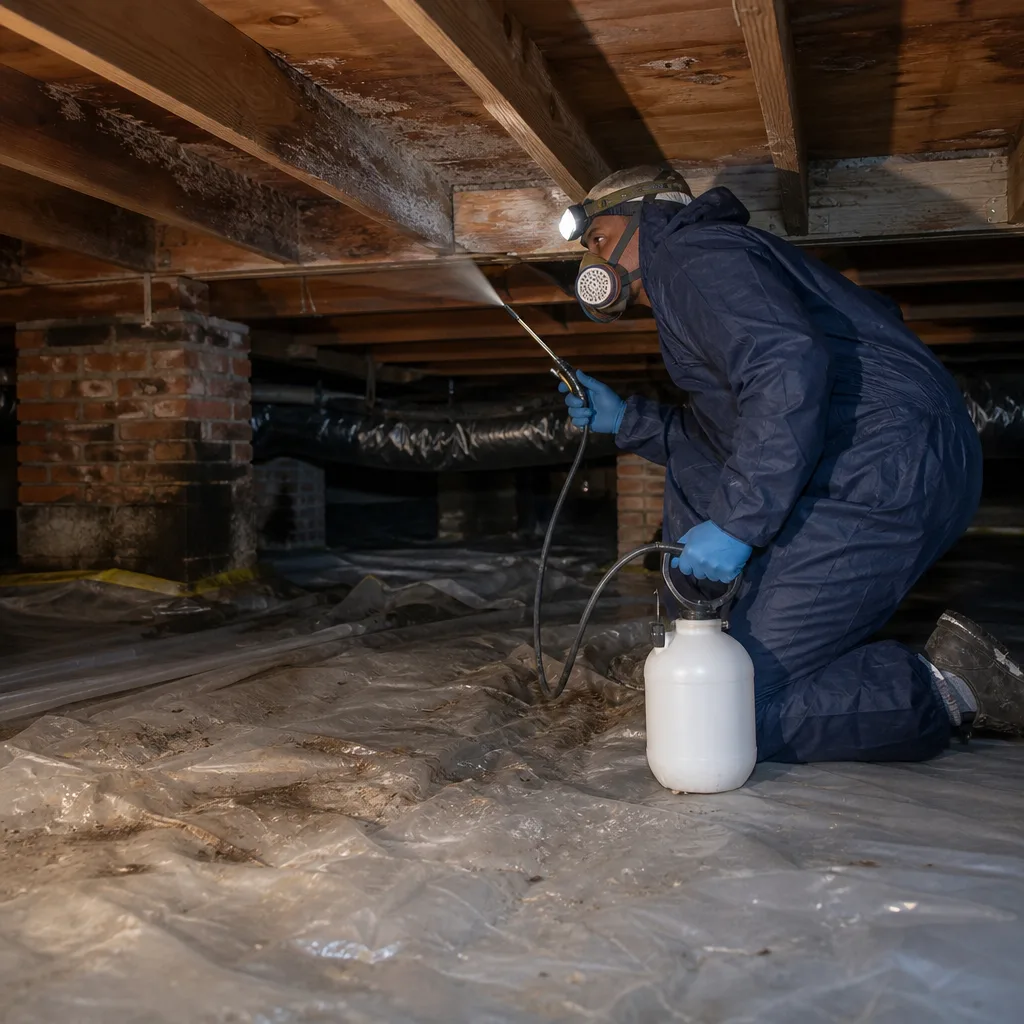
- Ignoring musty odor because visible mold isn’t present. Mold growth begins before it’s visible to casual inspection. By the time you see it, the colony has typically been established for 14 to 21 days. Musty odor in a previously dry space always warrants investigation with moisture measurement.
- Accepting verbal estimates for restoration work. Haven Standard, Clause 1 exists because verbal estimates lead to scope disputes, unpaid invoices, and incomplete work. Every restoration job should have a written price before work starts, with no exceptions.
- Installing gutter guards and never inspecting beneath them. Fine debris passes through most guard systems and accumulates in gutters, creating a compost layer that accelerates corrosion. Annual removal and cleaning remains necessary even with guards.
- Failing to document pre-existing conditions before seasonal risks. The photos you take in October are the evidence that March damage was new and storm-related, not long-term maintenance neglect that your policy excludes.
When to Call a Professional
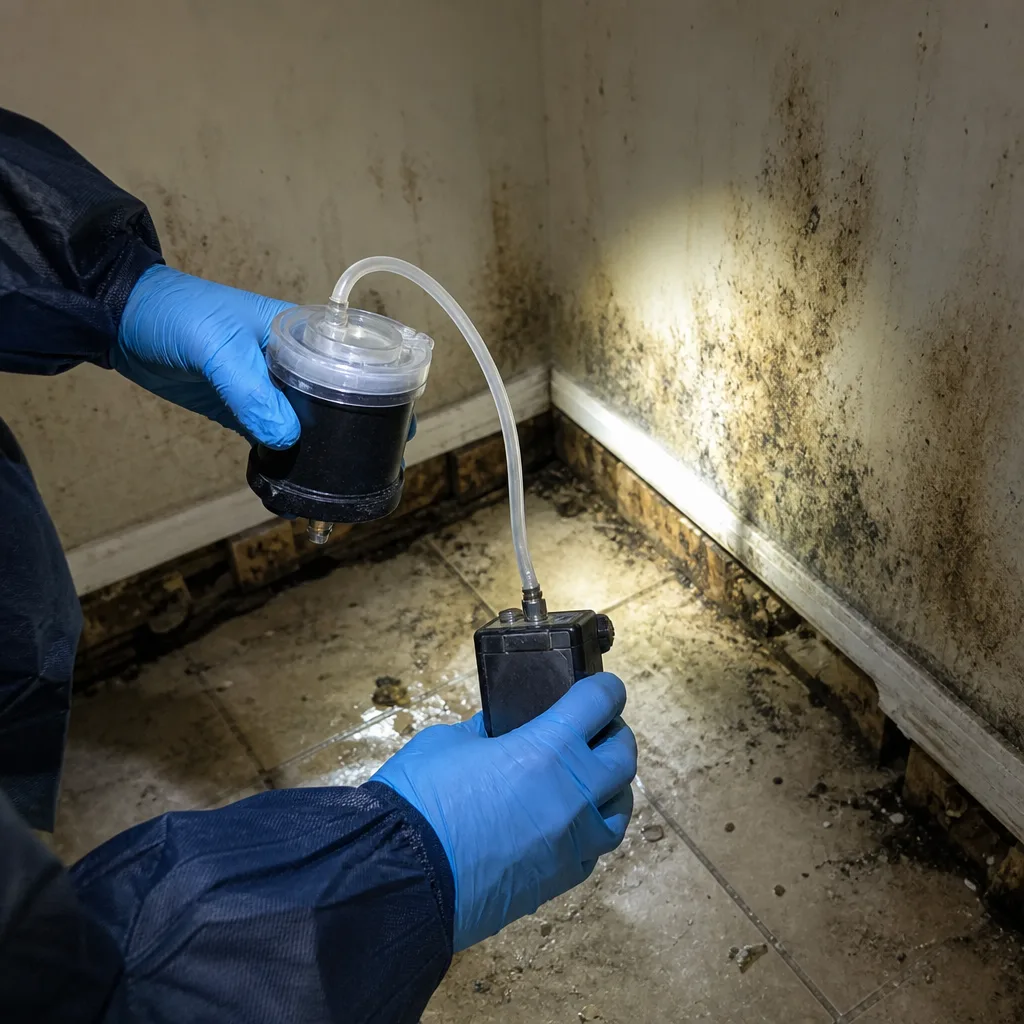
Some conditions require immediate professional assessment regardless of season. Call for evaluation when: water enters your basement or crawl space and you cannot identify the source within 30 minutes; you discover mold growth covering more than 10 square feet; your sump pump fails during active rainfall; a fire or smoke event affects more than one room; or sewage backup occurs in any quantity.
We recommend mold remediation in Hackensack for any visible mold in HVAC systems or on structural materials, as DIY removal often disperses spores and worsens contamination.
DryMark Restoration Hackensack offers free estimates in Hackensack. Our assessments include written scope and pricing before any work begins, documented photo records, and direct coordination with your insurance adjuster when a claim is involved. Call (551) 213-3409 to schedule.
Frequently Asked Questions
Annual prevention costs for a typical Hackensack home range from $400 to $1,200, depending on property condition and risk factors. This includes professional gutter cleaning ($200 to $350), sump pump maintenance or replacement ($150 to $600), dehumidifier operation ($100 to $250 annually in electricity), and basic materials for sealing and maintenance. Foundation grading correction, if needed, runs $800 to $2,500. These investments compare favorably to the $3,500 to $15,000 cost of a typical basement water damage restoration with mold prevention. Call (551) 213-3409 for a specific assessment of your property - estimates are free.
Standard homeowners insurance excludes damage from surface water flooding, including river overflow and storm surge. Coverage for these perils requires a separate flood policy through the National Flood Insurance Program or private market. However, water damage from sudden and accidental causes - burst pipes, sump pump failure, or rainwater entering through storm-damaged roofs - is typically covered under standard policies, subject to your deductible and policy limits. Documentation is critical: photos of the damage source, moisture readings, and immediate mitigation efforts support your claim. DryMark Restoration Hackensack provides photo-documented assessments and direct adjuster coordination on every job. Call (551) 213-3409 for documentation support.
Our live dispatch answers every call, 24 hours a day, 7 days a week, with no voicemail trees. Emergency response for active water intrusion, fire damage, or sewage backup typically arrives within 60 to 90 minutes in Hackensack and surrounding Bergen County. Non-emergency assessments for seasonal preparation or post-event documentation are scheduled within 24 to 48 hours. The critical factor is calling before secondary damage develops - mold growth becomes viable in 48 to 72 hours, and every hour of standing water increases structural damage and restoration cost. Call (551) 213-3409 for immediate dispatch or scheduling.
Musty odor without visible growth requires moisture investigation first. If moisture source is eliminated and readings return to normal, cleaning and dehumidification may suffice. Visible mold growth on porous materials - drywall, insulation, carpet, unfinished wood - requires remediation following IICRC S520 standards, which include containment, negative air pressure, removal of affected materials, and post-remediation verification. Surface mold on non-porous materials can sometimes be cleaned with appropriate biocides. The distinction matters because improper cleaning of significant contamination disperses spores and can create health hazards. We offer free second opinions on any competitor’s mold assessment - bring their written estimate and we’ll review it at no charge.
Condensation appears uniformly on cold surfaces during humid periods, has no point of origin, and produces moisture meter readings that drop rapidly with depth into the material. Active intrusion enters at specific points, leaves flow patterns or staining, correlates with rainfall rather than humidity, and shows sustained elevated readings at depth. Condensation is managed with dehumidification; intrusion requires source control. Misdiagnosis is expensive - we’ve seen homeowners install $8,000 interior drainage systems for condensation that a dehumidifier would have solved. Document with photos and moisture readings, or call for professional assessment.
At DryMark Restoration Hackensack, we coordinate directly with your adjuster as part of our standard service. This includes providing the photo documentation, written scope, moisture logs, and material classifications that adjusters need to validate coverage and approve payment. Our documentation is formatted to insurance industry standards, reflecting our founder’s background in claims adjustment. You remain the policyholder and must authorize all work, but the administrative burden of documentation and negotiation falls on us. This direct coordination typically accelerates claim resolution by days or weeks compared to contractors who provide minimal documentation and expect homeowners to manage adjuster communication.
The Bottom Line
Seasonal damage prevention in Hackensack isn’t about checking every box every month. It’s about concentrating your effort where the risk actually concentrates: late winter snowmelt, late summer tropical remnants, and the secondary risks of summer HVAC loading and fall drainage failure. Document what you find. Distinguish condensation from intrusion. Verify that your contractor provides written pricing before work starts, photo records on every visit, and daily moisture logs that prove drying progress. The homeowners who fare best after damage events are those who prepared specifically, documented thoroughly, and chose restoration partners who treat evidence as seriously as they do.
Written by Alicia Brennan, Owner at DryMark Restoration Hackensack, serving Hackensack since 2011.